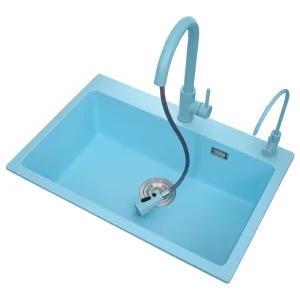
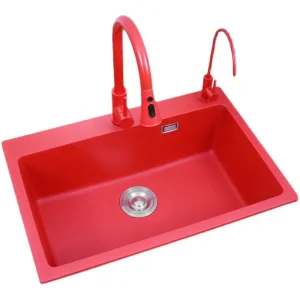
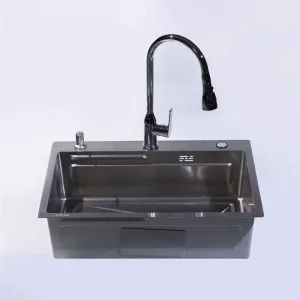
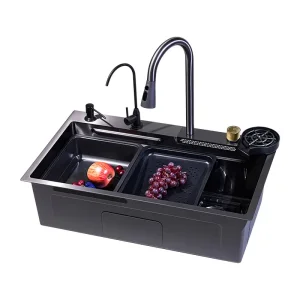
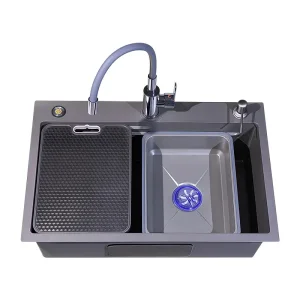
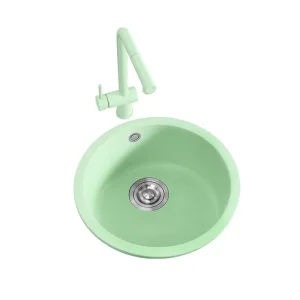
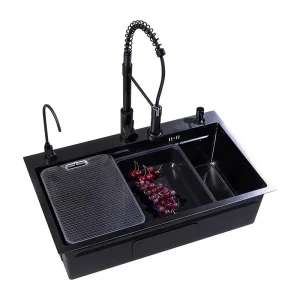
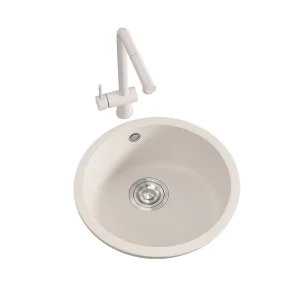
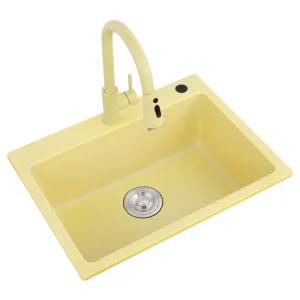
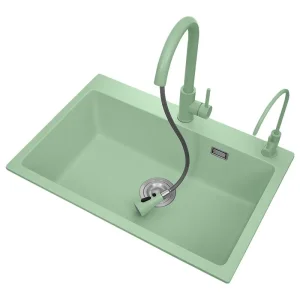
Explore our elite line of modular sink platforms, designer collections, and integrated organizers engineered for commercial-grade kitchens and residences alike.
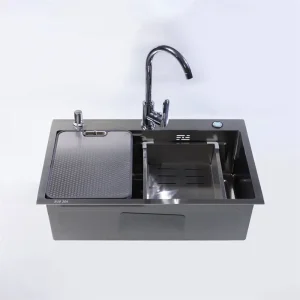
In modern architectural configuration and industrial interior design, standardizing the size of double kitchen sinks is not merely a question of aesthetic symmetry. It is a critical functional engineering decision that governs workflow efficiency, under-counter clearance, plumbing installation layout, and spatial optimization. For builders, developers, and global procurement departments, recognizing the spatial metrics of double kitchen sinks is paramount to securing seamless integration within standard kitchen cabinetry layouts.
The standard overall dimensions for a double-bowl kitchen sink traditionally range from 33 inches to 36 inches in length, 18 to 22 inches in width, and 8 to 10 inches in depth. These proportions are specifically calculated to align with standard base cabinets (specifically 36-inch and 39-inch cabinet bases). The division of the bowls—often configured as a symmetrical 50/50 split, an offset 60/40 configuration, or an aggressive 70/30 configuration—determines the utility profile. A 50/50 split allows for concurrent dual task flows (e.g., wash and rinse stages), while an asymmetrical split permits large-format cookware soakage in the dominant basin while retaining quick access to the waste disposal or drainage array in the secondary basin.

The table below presents the industry standard dimensional parameters of double kitchen sinks and their application suitability across architectural project types. When selecting components for large-scale multi-family developments or custom single-family residences, specify exact dimensions according to ADA guidelines or cabinet parameters.
| Product Type & Configuration | Standard Dimensions (L x W x D) | Recommended Base Cabinet Size | Ideal Application Scenario |
|---|---|---|---|
| Equal Double Bowl (50/50 Split) | 33" x 22" x 9" (838mm x 559mm x 228mm) | 36" (914mm) Minimum | Traditional residences, standard multi-family apartments |
| Offset Large/Small Bowl (60/40 Split) | 32" x 19" x 9" (813mm x 482mm x 228mm) | 36" (914mm) Minimum | Modern residential kitchens with heavy cooking habits |
| Extra-Wide Double Bowl (70/30 Split) | 36" x 20" x 10" (914mm x 508mm x 254mm) | 39" (990mm) Minimum | Semi-professional home kitchens, open-plan spaces |
| Compact Double Bowl (Mini Offset) | 29" x 18" x 8" (736mm x 457mm x 203mm) | 33" (838mm) Minimum | Urban micro-apartments, European style compact layouts |
| Farmhouse/Apron Front Double Bowl | 33" x 20" x 10" (838mm x 508mm x 254mm) | 36" (914mm) Farmhouse Ready | High-end custom villas, rustic style design builds |
Operating from Henan, China, Henan Yigen Kitchen & Bathroom Co., Ltd. blends highly automated hydraulic press lines with handcrafted steel artistry to supply global markets at massive volume.
The industrial dominance of China's kitchen and bathroom manufacturing relies on deep supply chain integration and raw material proximity. At Henan Yigen, we operate a vast 50,000 square meter plant, employing over 700 production specialists. We maintain close partnerships with leading domestic steel refineries, securing prime SUS304 grade stainless steel with optimized chromium-nickel ratios. This grade ensures high corrosion resistance, excellent structural integrity, and superior weldability during deep-drawing and laser-welding processes.
By leveraging advanced multi-axis CNC bending machinery and automated robotic polishing stations, Yigen guarantees dimensional tolerance levels within fractions of a millimeter. This extreme precision ensures that our undermount and drop-in double kitchen sink ranges drop seamlessly into pre-routed countertop apertures, eliminating installation friction for building contractors globally.
Our dedicated R&D laboratory, consisting of 25 technical R&D and 10 design specialists, continually develops proprietary sound-dampening coatings and anti-condensation undercoatings. These advanced back-barrier sprays prevent condensation buildup under the sink in high-humidity climates—protecting precious wood cabinetry from moisture damage and rot.
Moreover, our manufacturing output supports diverse finish treatments, including standard satin brushed texture, micro-debossed honeycomb anti-scratch textures, and state-of-the-art PVD nano-ceramic color coatings. From raw steel coil processing to finalized packaging, the entire line adheres strictly to global quality control standards.
Forging exquisite craftsmanship and sharing quality life. Explore the core segments of our integrated modular solutions designed for contemporary kitchen systems.
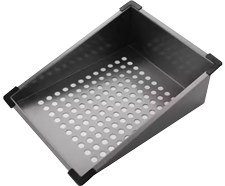
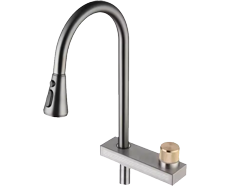
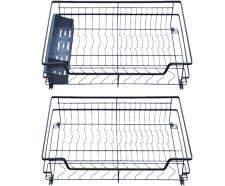
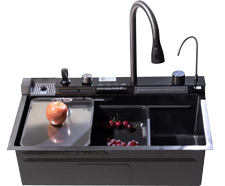
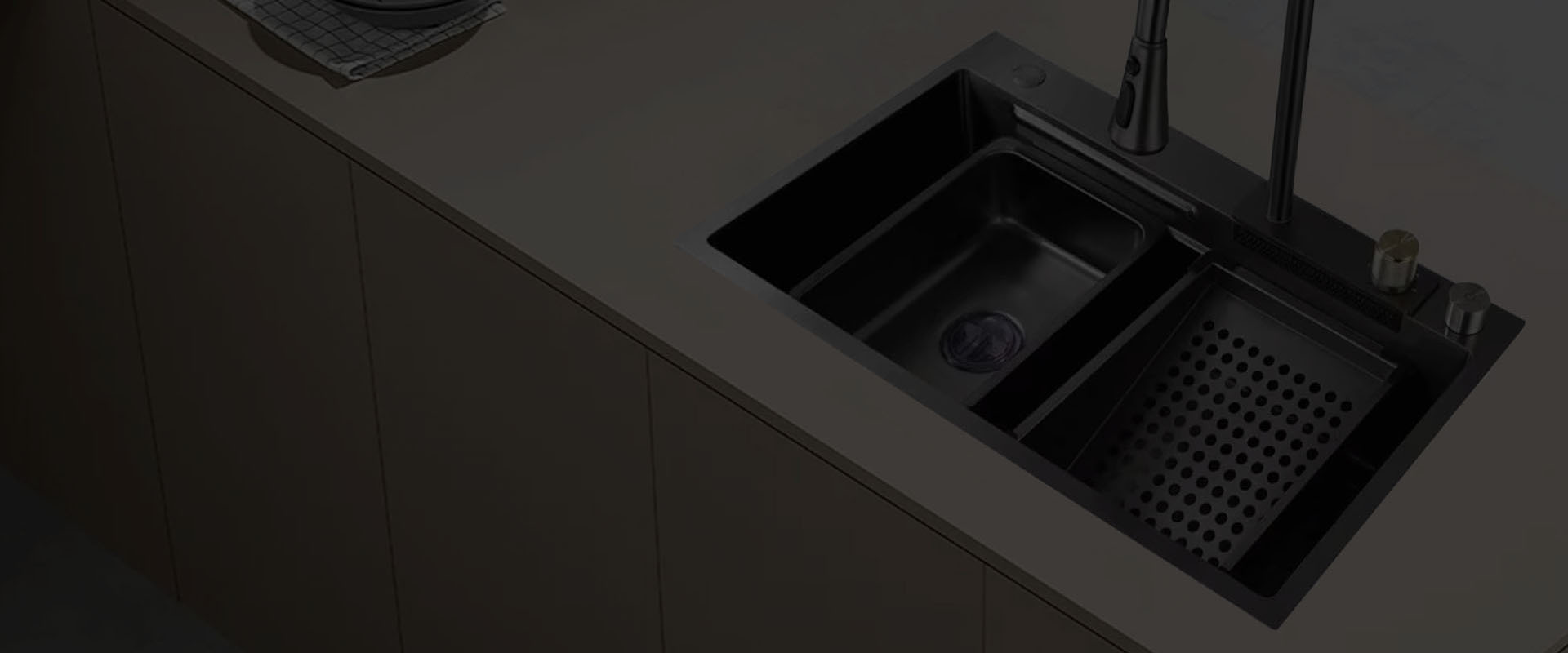
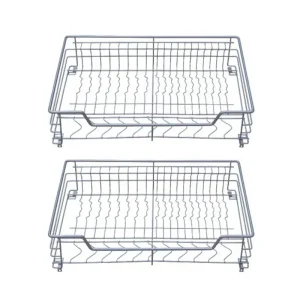
Daily life starts from the kitchen. Our research reveals that a double-basin sink acts as the core control center of food preparation and dish maintenance. By configuring customizable drain baskets, pull-out wire drawers, and solid hardwood cutting boards directly into the stepped ledges of our sinks, we transform standard double sinks into comprehensive smart prep-stations.
View More SolutionsWe host a comprehensive manufacturing and customization flow to serve B2B buyers throughout the development cycle, guaranteeing precision from original drawing to mass delivery.

1. Provide ID Design

2. 3D Modeling

3. Open Real Mold

4. Confirm Sample

5. Modify Sample

6. Sample Testing

7. Mass Production
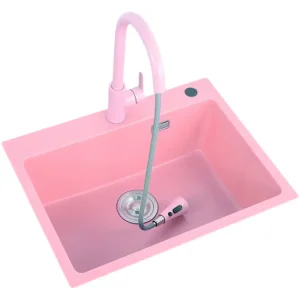
Discover how custom color treatments and unique materials elevate double kitchen sinks into design focal points.

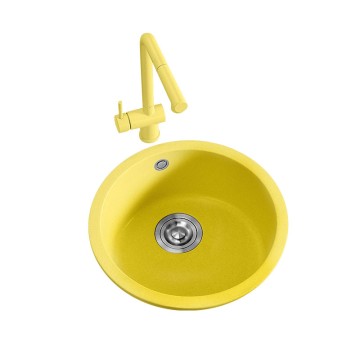
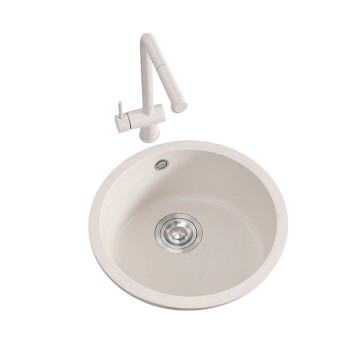
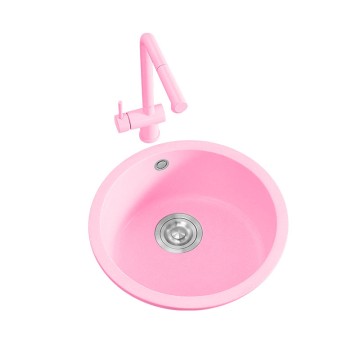
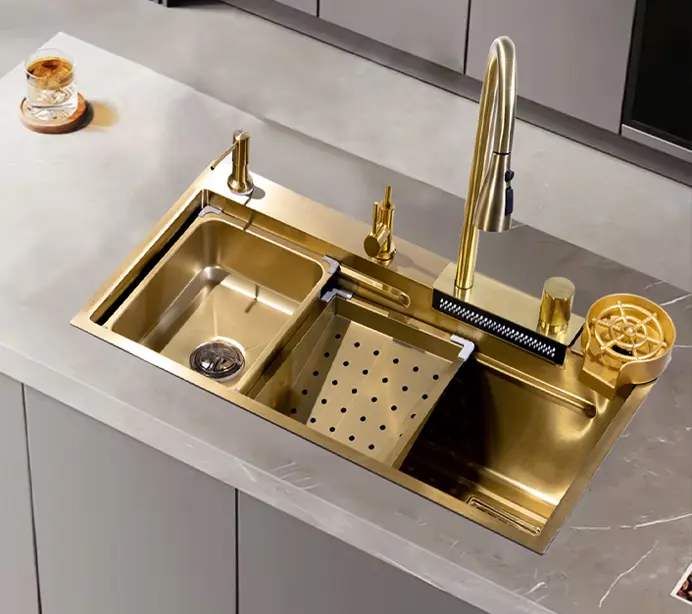
When global construction firms and sanitaryware distributors procure double kitchen sinks, they must navigate strict compliance regimes and geographical product preferences. In North America, imports must comply with the cUPC (Uniform Plumbing Code) certification, which validates compliance with ASME A112.19.3/CSA B45.4. For European markets, the CE mark and compliance with BS EN 13310 are mandatory, regulating drain performance, load resistance, and thermal shock behavior. In Australia, the WaterMark certification acts as the regulatory gatekeeper.
Beyond certification, dimensional compatibility with localized appliance lines is critical. In North American layouts, double sinks are expected to hold deep 9 to 10-inch bowls to conceal large stockpots. In contrast, European developments often prefer shallower 7 to 8-inch depth basins to accommodate space constraints and gravity-fed drain systems. Purchasing managers must also balance transport logistics; handmade double sinks feature flat side profiles that stack tightly, while deep-drawn models nest, minimizing sea-freight volumes.
In response to evolving sanitary requirements, modern double kitchen sinks have transitioned from passive washing basins to high-performance workspace solutions. The surface technology applied directly affects longevity and cleanliness. Classic brushed satin finishes are achieved via mechanized belt polishing, providing a resilient finish that hides water spots. However, nano-ceramic coatings—applied through high-vacuum physical vapor deposition (PVD)—represent the technological frontier. These coatings bind thin layers of titanium or chromium compounds directly to the steel, creating hydrophobic surfaces that repel oils and food residue. This process also enables rich designer colors like copper, gunmetal, and matte gold, matching upscale kitchen aesthetics.
We source prime stainless steel sheets containing 18% chromium and 8% nickel, guaranteeing lifelong rust protection and resistance to acid erosion from everyday culinary ingredients.
Every double sink is fitted with thick rubber sound-insulating pads covering over 80% of the exterior walls, dampening operational noise from rushing water and garbage disposals.
Featuring handmade R10 rounded inner corners, our sinks balance contemporary linear style with simple, wipe-clean corners, preventing grease and limescale buildup.
Expert technical answers addressing the most common questions raised by construction architects, procurement managers, and kitchen designers.
A: Subtract three inches from the total width of the sink's rim to find the required interior cabinet opening. For example, a standard 33-inch double-bowl sink requires a 36-inch base cabinet. For farmhouse or apron-front double sinks, specialty cabinetry with front drop-out doors is required to accommodate the heavy forward weight and deep apron exposure.
A: A 60/40 ratio offsets the central divider to provide one large bowl (usually 18-20 inches wide) and one smaller bowl. The larger side accommodates long pans, sheet trays, and woks flat on the basin bottom. The smaller side remains open for secondary prep, hand-washing, or food waste processing.
A: Handmade sinks are fabricated from flat steel sheets welded at the seams, keeping the steel thickness uniform across the base, corners, and side walls. Drawn sinks, formed by hydraulic presses, stretch the steel, thinning the corners. Handmade sinks also offer tighter radius corners (R0/R10) for a modern aesthetic.
A: PVD (Physical Vapor Deposition) is applied in a vacuum, forming a molecular-level bond with the steel. This treatment increases scratch resistance and introduces a hydrophobic surface. This helps prevent water droplet mineral deposition, keeping the sink cleaner for longer.
A: The cUPC certification, issued by IAPMO, verifies compliance with US plumbing codes and safety standards. Sinks without this certification are often prohibited from installation in commercial or multi-family construction projects, making it a prerequisite for importers.
A: Yes. Rear-set drains maximize usable flat space inside the bowls, allowing dishes to stack without blocking the drain. They also place the drain pipes further back in the under-sink cabinet, freeing up storage space for pull-out baskets and recycling bins.
Stay informed with technical market analyses, design updates, and supply chain news from the sanitary manufacturing sector.
Explore how nano-composite coatings, smart sensors, and modular ledge designs are transforming high-end residential double sinks.
An in-depth study showing that multi-functional kitchen double sinks reduce prep time by up to 30% through improved zone ergonomics.
Analyzing global trade data, supply chain relocation, and the growing demand for certified lead-free kitchen fixtures in North America and Western Europe.
Browse our selection of specialized utility fixtures, child-safe colorful lines, and modern kitchen accessories.
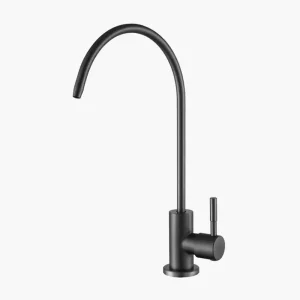
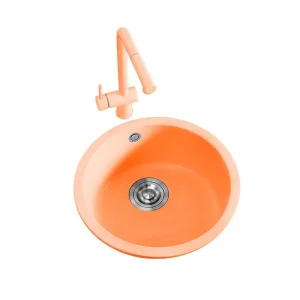
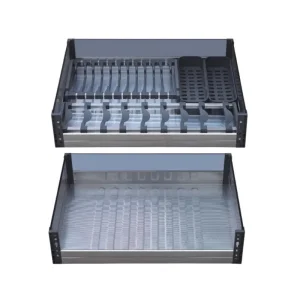
Our vision is to create high-quality products for every customer through exquisite craftsmanship and unique design, adhere to the principles of integrity and customer service first, and meet the diverse needs of customers. At the same time, we will continue to move forward and eventually become a world-renowned brand.
 YiGeng