Engineered with Architectural Precision & High-Durability Materials for Modern Spaces
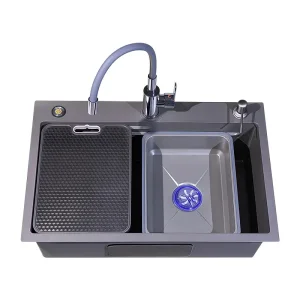
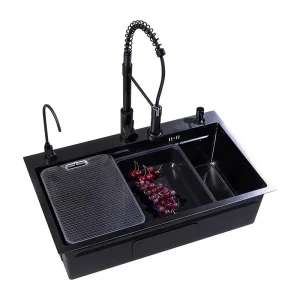
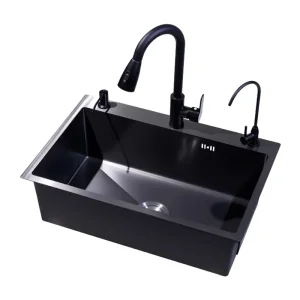
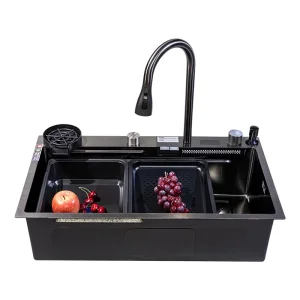

Our business is not only spread across various domestic platforms and markets, but also involves cross-border and multi-party trade fields. Currently, we cooperate with countries all over the world and have thousands of overseas buyers.
Our vision is to create high-quality products for every customer through exquisite craftsmanship and unique design, adhere to the principles of integrity and customer service first, and meet the diverse needs of customers. At the same time, we will continue to move forward and eventually become a world-renowned brand.
End-to-End Technical Workflow from Concept Development to High-Volume Manufacturing

Provide ID Design

3D Modeling

Open Real Mold

Confirm Sample

Modify Sample

Sample Testing

Mass Production
Selecting high-performance kitchen assets requires an understanding of stainless steel metallurgy. As global supply chain demands shift, purchasing managers must distinguish between basic commercial grades and heavy-duty, corrosion-resistant alloys. Our manufacturing processes primarily deploy AISI 304 and AISI 316 austenitic stainless steels, materials defined by their specific chemical profiles of chromium (minimum 18%) and nickel (minimum 8%). This composition creates a self-healing chromium oxide passive film on the surface of the sinks and baskets, preventing oxidation and corrosion even when exposed to harsh industrial solvents, acids, and constant moisture.
For highly demanding commercial or medical environments, we also fabricate bespoke solutions incorporating specialized molybdenum alloys to resist pitting corrosion. Our products undergo rigorous testing, including spectral analysis to verify alloy ratios, salt spray testing to gauge chemical resistance, and tensile tests to evaluate long-term load bearing. We supply complete material traceability reports with each production batch, providing transparency and compliance for projects that must satisfy strict health and safety standards.
Kitchen layouts differ dramatically based on their intended application. Real estate developments, multi-family housing projects, hospitality venues, and medical facilities all present distinct design, size, and sanitation challenges.
Operating a 50,000 square meter facility with over 700 production specialists requires structured automation. At Henan Yigen Kitchen & Bathroom Co., Ltd., we have transitioned from traditional sheet-metal fabrication to an integrated Industry 4.0 model. We utilize high-power CNC laser cutting centers, robotic arm argon-arc welding stations, and automatic hydraulic presses. This automation ensures structural tolerances are kept below 0.1 mm, preserving identical dimensions across large-volume production runs.
By positioning our primary factory in Henan, China, we benefit from proximity to national steel mills and refined metallurgical industrial clusters. This integration shields our manufacturing pipelines from sudden raw material price shocks and logistics bottlenecks. Our production framework provides buyers with high quality, low waste, and reliable delivery, even during peak global supply cycles.
The future of kitchen steel revolves around ecological sustainability and smart integrations. Over the next five years, our R&D team (comprising 25 engineering experts) is targeting three main areas:
Navigating international trade barriers and customs rules is critical for B2B procurement managers. As an export-oriented supplier, Henan Yigen Kitchen & Bathroom Co., Ltd. coordinates shipments under various Incoterms (FOB, CIF, DDP, EXW) tailored to your logistics setup. We ensure all exported items carry the required certifications for target markets, including cUPC (Uniform Plumbing Code) for North America, CE marking for Europe, and lead-free material compliance certifications for municipal drinking water systems.
Explore our categorized range of high-performance components
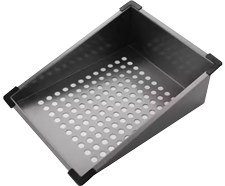
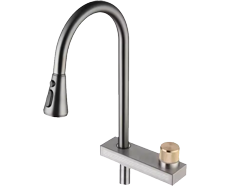
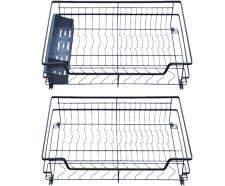
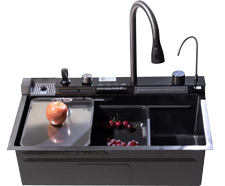
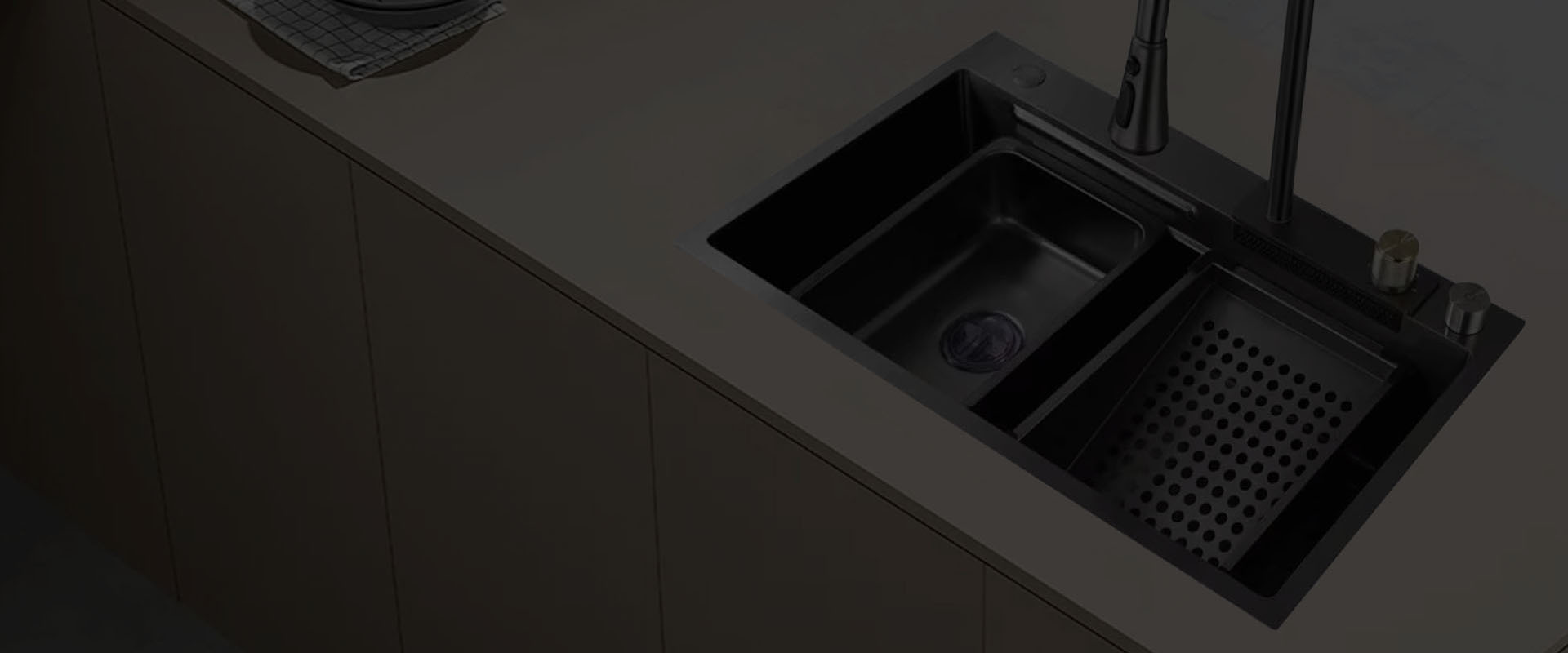
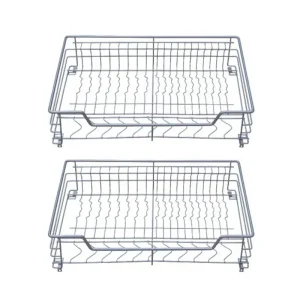
Daily life starts from the kitchen. Our functional drain baskets are built to fit seamlessly into diverse sink dimensions, utilizing premium grade stainless steel wire that prevents rust and supports heavy kitchen loads.
Technical answers to critical procurement questions on material grades, customizations, and standards
SUS304 contains a minimum of 18% chromium and 8% nickel, providing strong resistance against corrosion, chemicals, and oxidation. SUS201 replaces much of the nickel with manganese, lowering production costs. However, SUS201 has significantly lower corrosion resistance and is prone to surface rust when exposed to moisture and acidic materials. For commercial or high-humidity environments, we always recommend SUS304 or higher.
No, Physical Vapor Deposition (PVD) is a vacuum deposition method that bonds a thin, dense ceramic coating at the molecular level. It actually increases the surface hardness and wear resistance of the steel without compromising its food-safe properties. PVD finishes do not peel, chip, or release harmful compounds, making them highly suitable for high-use kitchens.
For customized structural designs, the tooling and mold production process requires approximately 20 to 30 days, depending on geometry complexity. Once the 3D model is approved and the physical mold is fabricated, test samples are provided within 7 days. Upon sample sign-off, bulk production cycles range from 25 to 40 days.
We utilize automated CNC deep-drawing hydraulic systems with real-time pressure monitoring. This prevents local wall thinning, which often occurs at the lower corners of deep basins. Hand-made and welded sinks are fabricated using 16-gauge (1.5mm) or 18-gauge (1.2mm) sheet steel, ensuring uniform thickness across the flat surfaces and corners.
Our factories comply with ISO 9001 and ISO 14001 guidelines. Our stainless steel products are free from lead (Pb) and other heavy metals, aligning with RoHS standards. Additionally, the acoustic dampening pads on our sinks are made from non-toxic rubber compounds rather than asphalt-based materials, maintaining air quality in indoor environments.
Market reports, technical updates, and design forecasts for B2B professionals
Discover how recycling protocols and smart automated machinery are redefining stainless steel sink production pipelines for lower global carbon footprints.
When designing a modern kitchen, the sink takes center stage. Learn how B2B buyers select size, thickness, and configuration to match commercial workloads.
The global sink market continues to experience dynamic growth, driven by raw material fluctuations, localized tariff shifts, and infrastructure investments.
Engineered for high performance, ease of installation, and structural durability
 YiGeng