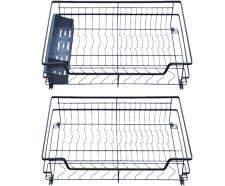
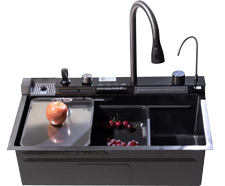
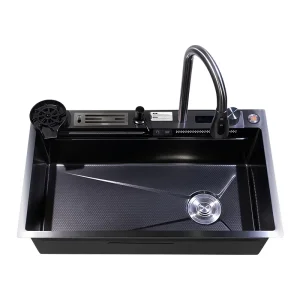
Direct Factory Sourcing: Cost-Efficient & Precision-Engineered Stainless Steel Systems

The international commercial and residential catering industry is undergoing a paradigm shift. Stainless kitchenware, once valued primarily for structural durability, is now evaluated on hygiene compliance, lifecycle economic efficiency, and environmental sustainability. Global business operations in hospitality, large-scale institutional canteens, and real estate developments require kitchen environments that satisfy strict sanitation criteria while controlling capital expenditure.
According to market indicators, the global stainless steel kitchenware market is projected to expand significantly, driven by urbanization, stricter commercial food safety regulations, and a growing consumer preference for modular kitchen layouts. For commercial procurement officers, finding a manufacturing partner that balances cost efficiency with structural integrity is critical. A reliable partner must navigate fluctuating raw material indices (such as LME Nickel and Chromium prices) and offer stable, predictable pricing models.
Modern stainless kitchenware production relies on advanced material sciences. The baseline standard, SUS304 (Austenitic Stainless Steel, 18/8 Chromium-Nickel alloy), is highly valued for its natural corrosion resistance, high tensile strength, and structural performance under extreme thermal conditions.
In response to complex modern demands, our production systems employ advanced metallurgy to produce high-temperature resistant stainless steel sinks and component accessories. In these products, grain boundary carbide precipitation is minimized during deep drawing and welding processes. This material integrity ensures long-term resistance to localized pitting and stress corrosion cracking under aggressive sanitizing agents and saline exposures. This engineering precision provides global commercial procurement channels with reliable, high-performance fixtures.
High-precision manufacturing across specialized structural applications
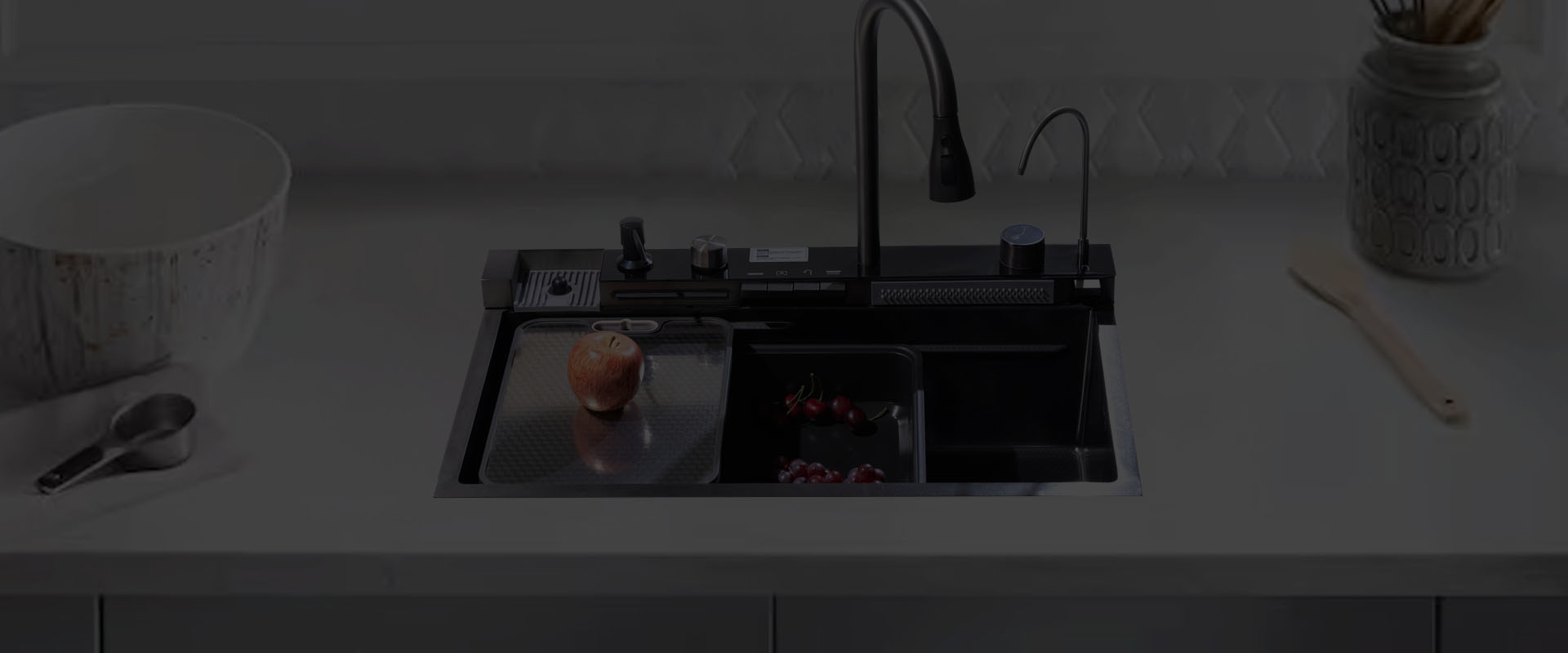
At Henan Yigen Kitchen & Bathroom Co., Ltd., we combine state-of-the-art cold-drawing press machinery with high-precision robot welding to produce robust physical structures. Daily commercial and residential activities center around the washing area. Our products are built to withstand rigorous use while maintaining aesthetic appeal, thermal stability, and sound-dampening qualities.
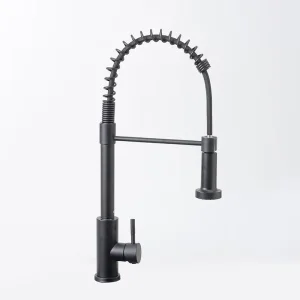
Every product detail, from R10 corner radiuses in manual sinks to multi-layered plating configurations on telescopic faucets, is carefully controlled to deliver a reliable user experience.
Modern B2B procurement requires both price competitiveness and reliable supply chains. Henan Yigen Kitchen & Bathroom Co., Ltd. uses digital manufacturing protocols to optimize our operations. Our 50,000 square meter factory floor integrates raw sheet metal blanking, deep drawing, surface treatment, and packaging into a single continuous workflow.
By consolidating production processes, we eliminate third-party handling costs and reduce turnaround times. This vertical integration allows us to offer high-quality kitchenware at competitive prices. It also helps buffer global buyers from sudden supply chain disruptions.
Operating with over 700 production staff and 25 R&D engineers, we run structured shifts that maintain output quality during peak seasonal demand. This manufacturing foundation supports global distributors who require reliable supply partners to manage inventory risks.
B2B buyers face diverse international requirements. European and North American buyers prioritize compliance certifications (such as CUPC and CE), strict dimensional tolerances, and low-lead materials. Emerging markets often require durable, high-capacity utility fixtures optimized for cost-effective transport.
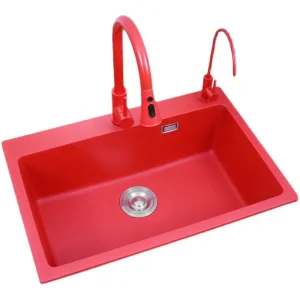
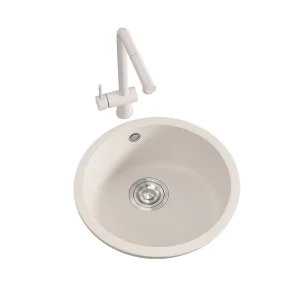
Our engineering and design teams address these distinct regional needs by providing custom configurations. Whether adapting mounting systems for local building codes, tailoring PVD color coatings (such as Chinese Red, Cream White, or Macaron finishes) to fit consumer trends, or fabricating custom sizes, we ensure every product meets local market specifications.
From conceptual industrial design to mass production and quality assurance

1. Provide ID Design

2. 3D Modeling & Engineering

3. Tooling & Mold Openings

4. Pre-Production Sampling

5. Structural Refinements

6. Rigorous Physical Testing

7. Automated Mass Production
Stainless steel kitchenware serves a wide variety of installation scenarios, each with distinct performance demands:
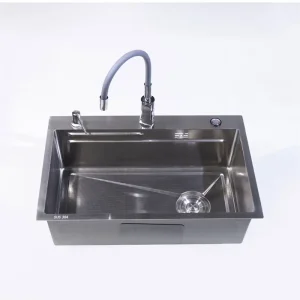
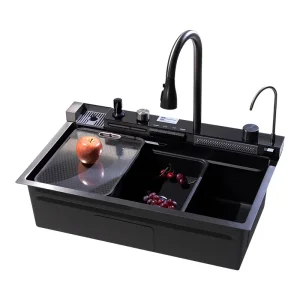
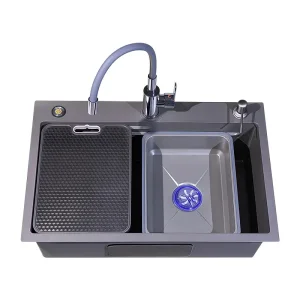
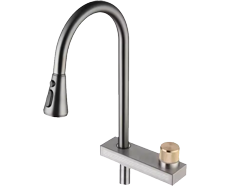
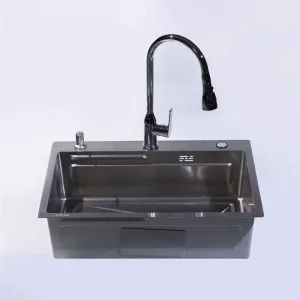
Commercial Kitchens & Food Service: In fast-paced restaurants and catering facilities, kitchenware must withstand heavy, continuous use. Large, under-mount double-bowl sinks and high-arc pull-out faucets allow staff to handle cookware quickly. Surface treatments like brushed finishes help mask minor scratches and surface wear.
Residential Installations: Modern homes favor custom finishes like PVD-nano colored sinks (in cream white or pastel tones) that coordinate with architectural cabinetry. These fixtures combine aesthetic appeal with durability, resisting daily stains and household acids.
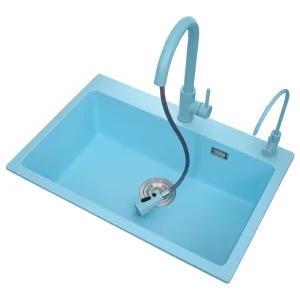
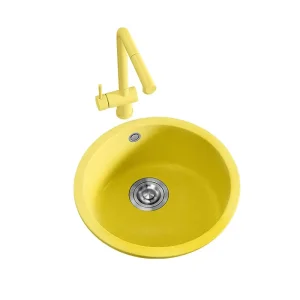
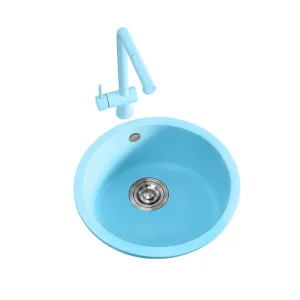
Educational & Childcare Facilities: Facilities for younger users require tailored designs. Sinks in vibrant color schemes (such as bee yellow or ocean blue) and smaller dimensions help teach sanitation habits in comfortable, age-appropriate environments.
Medical & Cleanroom Settings: Environments requiring strict infection control rely on high-grade austenitic stainless steel. Smooth, radius-cornered sinks prevent bacterial buildup in crevice joints and withstand strong disinfectant solutions, supporting reliable cleaning protocols.
Market updates and engineering briefs from our technical team
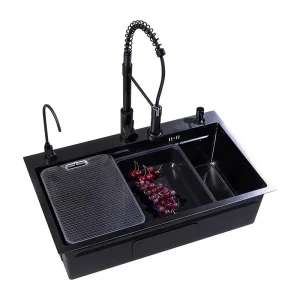
Analyzing structural materials, integrated prep stations, and space-saving designs in urban developments.
Read ReportReviewing work-station sink layouts that maximize kitchen workflow efficiency and spatial utility.
Read ReportExamining urbanization trends and shifting material regulations affecting B2B procurement channels.
Read ReportTechnical information and purchasing guidance for global procurement teams
Standard tooling and pre-production sampling require 15 to 21 days. Following customer approval of samples, the production phase takes 30 to 45 days, depending on batch volume and customization complexity.
Our factory utilizes automated argon-arc and precision laser welding, followed by thermal stress relief. Every weld seam undergoes physical inspection and liquid penetrant testing to confirm the seal is free of micro-cracks and porosities.
Yes, our design team adapts manufacturing configurations to align with regional standards. We work closely with international testing labs to ensure compliance with NSF, CUPC, and CE regulations.
We offer physical vapor deposition (PVD) nano-coating, satin brushing, circular polishing, and electroplated protective coatings. These finishes help improve wear resistance and maintain appearance in high-traffic installations.
Comprehensive Commercial & Residential Hardware and Space-Optimization Solutions
 YiGeng