Explore our highly durable, high-performance stainless steel double bowl sinks and associated kitchen hardware directly sourced from Henan Yigen Kitchen & Bathroom Co., Ltd.
An in-depth global market analysis on stainless steel double bowl sinks in commercial, residential, and institutional environments.
The global kitchen and sanitary fittings market is undergoing a structural paradigm shift driven by technological innovations in metallurgy, urbanization, and a strict adherence to corporate ESG policies. At the core of this transition lies the stainless steel double bowl sink, an essential component within residential properties, luxury apartments, hospitality sectors, and commercial food service facilities globally. As high-density housing developments expand across Europe, North America, and the Asia-Pacific region, the demand for modular, space-efficient, and long-lasting kitchen products has increased exponentially.
From a commercial and supply chain perspective, sourcing a cheap stainless double bowl sink supplier requires a thorough balance between cost efficiency and structural integrity. Historically, "cheap" within the B2B procurement space carried a negative connotation, indicating lower-grade raw metals or poor stamping techniques. However, modern manufacturing efficiencies, lean production systems, and automated laser-welding processes have redefined the cost curve. Today, leading manufacturers can supply premium-grade SUS304 stainless steel products at competitive prices, offering significant cost savings for developers, global wholesalers, and sanitaryware importers without compromising structural and environmental specifications.
Not all stainless steel products perform equally under harsh daily conditions. The durability of a sink is directly related to its metallurgical properties. High-quality double bowl sinks are primarily manufactured from ASTM SUS304 steel, containing approximately 18% Chromium and 8% Nickel. This specific elemental ratio forms a self-healing chromium oxide barrier on the steel's surface, preventing moisture, acids, and chemical cleaning agents from oxidizing the underlying iron structure. For coastal or highly corrosive commercial kitchen environments, manufacturers can customize products using SUS316 steel, which incorporates Molybdenum to enhance pitting resistance in chloride-heavy settings.
Furthermore, the choice between drawn (pressed) and handmade (welded) manufacturing processes significantly affects the cost-to-performance ratio. Pressed sinks are manufactured using high-pressure hydraulic presses that stamp a single sheet of steel into a mold. This process is optimized for high-volume, low-cost mass production. Conversely, handmade sinks are welded, folded, and polished manually or using robotic welding arms. This allows for tight inner corner radii (R0 or R15), which maximizes the volume of the bowls and provides a clean, modern aesthetic. Understanding these engineering differences is critical for global distributors looking to optimize their product portfolios for local market demands.
How PVD nanotechnology, acoustics engineering, and automated fabrication are redefining modern stainless steel sinks.
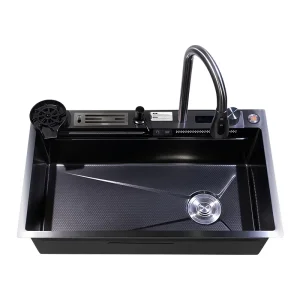
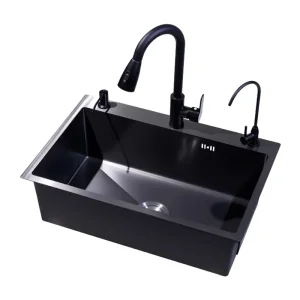
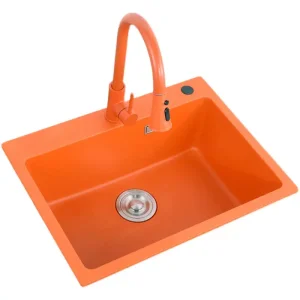
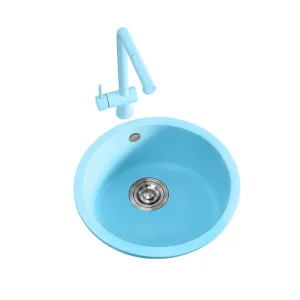
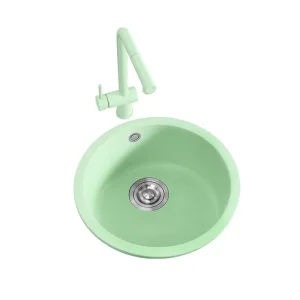
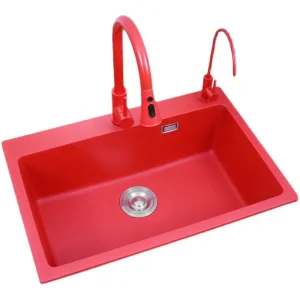
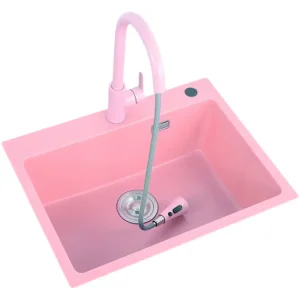
Physical Vapor Deposition (PVD) technology coats the stainless steel surface with a ceramic-metal film. This enhances scratch resistance, reduces water spots, and allows for colors like Hermes Orange, Forest Green, and Matte Black while maintaining corrosion resistance.
High-end stainless steel sinks utilize thick undercoating layers and heavy-duty rubber sound-deadening pads. This reduces water dripping noises and resonance within the kitchen cabinet, providing a quieter environment.
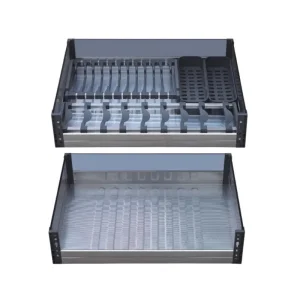
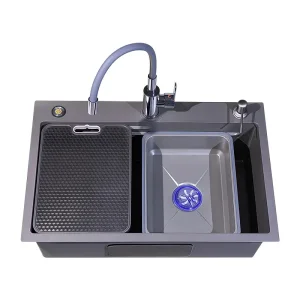
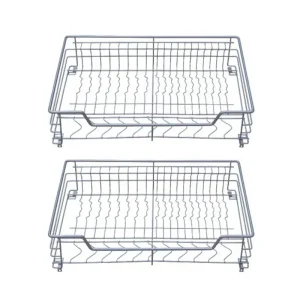
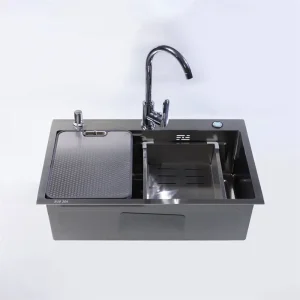
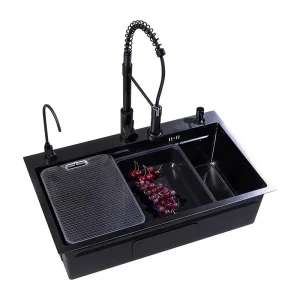
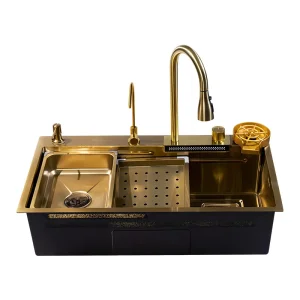
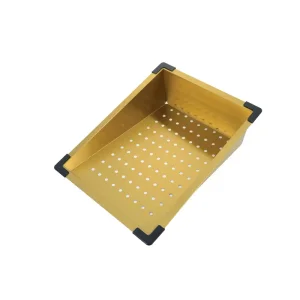
Double bowl sinks are increasingly designed as workstations. Integrated ledge steps allow cutting boards, colanders, and roll-up dish racks to slide across the basins, maximizing functional workspace in smaller kitchens.
Sustainability is no longer an optional compliance goal; it is a critical commercial requirement. Governments and builders globally are enforcing green building certifications, such as LEED (Leadership in Energy and Environmental Design) in North America and BREEAM in Europe. Stainless steel is inherently sustainable as a fully recyclable material, but the manufacturing process itself must also be clean. Henan Yigen Kitchen & Bathroom Co., Ltd. uses closed-loop water filtration systems in our grinding and polishing phases to minimize environmental impact. We also ensure that all sound-proofing undercoats are free from toxic asphalt-based compounds, replacing them with eco-friendly water-soluble paints.
We provide a complete customization process to serve you throughout, ensuring a seamless procurement experience from initial design to mass delivery.


Exploring how installation methods and design requirements vary across regional B2B markets.
Product requirements for double bowl sinks vary significantly depending on localized target markets. In the North American residential market, deep undermount double bowl sinks are highly favored. These sinks are installed below the countertop line, allowing food waste and water to be wiped directly into the basin. In contrast, European developers and renovation contractors often prefer top-mount (drop-in) or flush-mount sinks due to the prevalent use of wood laminate countertops. Top-mount installations feature a lip that rests on the countertop, protecting the core material from water damage.
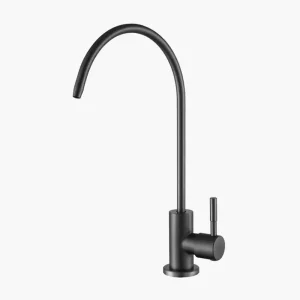
Furthermore, local plumbing regulations heavily influence product specifications. The United States and Canada rely on ASME A112.19.3/CSA B45.4 standards, which dictate minimum metal gauge thickness, drain hole locations, and load-bearing requirements for garbage disposers. European countries require compliance with CE markings and EN 13310 standards, focusing on drainage speed and temperature resistance. Henan Yigen Kitchen & Bathroom Co., Ltd. addresses these diverse regional needs by engineering versatile kitchen sink systems compatible with standard global plumbing fixtures, including basket strainers, custom grid inserts, and pull-out faucets.
When selecting a mounting type for large-scale real estate projects, developers must evaluate installation complexity against maintenance costs. Undermount installations offer clean visual lines and modern style, but require solid stone or quartz countertops to support the sink's weight. Drop-in installations are compatible with any countertop material and are easier to replace, but require high-quality silicone sealing along the outer edge to prevent grime and mold buildup over time.
In municipal housing projects, student dormitories, and modular office buildings, durability and ease of maintenance are critical. Sinks manufactured from thicker 16-gauge or 18-gauge SUS304 stainless steel are the industry standard for these high-use environments. A thicker gauge resists structural denting and deformation, while a brushed or satin finish helps mask hairline scratches and hard water stains, lowering long-term maintenance costs for property managers.
Our strategic manufacturing path to produce high-precision, low-carbon, smart sanitaryware solutions.
To maintain our position as a leading global manufacturer, Henan Yigen Kitchen & Bathroom Co., Ltd. has established a technical roadmap focused on high-precision automation, eco-friendly materials, and smart design. Our development timeline includes:
We are increasing the integration of high-precision robotic arms for grinding and laser-welding within our production lines. This ensures consistency in corner radius finishes (R10/R15) and uniform weld penetration. Our automated systems also reduce material waste during the stamping and shearing phases, helping us offer competitive pricing for bulk wholesale orders.
We are expanding our range of physical vapor deposition (PVD) finishes, offering hydrophobic and anti-microbial coatings. These nano-coatings inhibit the growth of bacteria and mold on the sink surface, providing a hygienic option for high-end residential and commercial food preparation areas.
Our long-term R&D efforts focus on integrating smart sensors and filtration systems directly into the double bowl architecture. This includes touchless sensor faucets, integrated waste shredders, and smart drainage systems that monitor water temperature and quality, aligning with modern smart home trends.
Our manufacturing facility spans over 50,000 square meters and houses advanced stamping machines, robotic welding stations, and manual finishing bays. Supported by a workforce of more than 700 production staff, 25 R&D engineers, and 10 in-house design specialists, we maintain a high production capacity capable of fulfilling large-scale international B2B orders with consistent quality.
Expert metallurgical and commercial answers to common procurement questions from distributors and contractors.
Explore our specialized custom designs, high-end colors, and essential sink accessories to complete your building project.

 YiGeng