Why Choose a Kitchen Faucet With Sink for Global Buyers?

Time:2026-09-26 Author:Sophia
0%

For global buyers, a Kitchen Faucet With Sink can simplify kitchen planning and improve daily workflow. One coordinated purchase may reduce compatibility concerns between the basin, faucet, fittings, and drainage position. It can also create a cleaner visual connection between cooking, washing, and food preparation areas. That matters in apartments, rental properties, hospitality projects, and compact family kitchens.

Experienced buyers should examine more than appearance. Check the sink dimensions, bowl depth, faucet height, mounting method, and included accessories. Stainless steel construction may offer practical durability, but material grade and manufacturing quality still require verification. A pull-out sprayer can make rinsing vegetables easier, while a high-arc spout may suit large cookware. Water pressure varies between regions. The faucet should perform reliably under local conditions.

Certification and installation details also deserve careful attention. Buyers should confirm whether the product meets applicable regional plumbing and safety requirements. Clear technical drawings, warranty terms, replacement parts, and responsive supplier support can reduce future risk. Packaging quality matters too. A scratched basin or damaged connector creates unnecessary delays.

No configuration is perfect. A larger sink may improve capacity but reduce counter space. A fashionable finish may need more frequent cleaning. Even supplier recommendations can overlook local habits. Therefore, global buyers should compare verified specifications with actual kitchen needs. Reviews from installers and long-term users can reveal practical issues that product images hide. With careful evaluation, a Kitchen Faucet With Sink becomes more than a convenient bundle. It becomes a considered investment in hygiene, efficiency, and dependable everyday use.
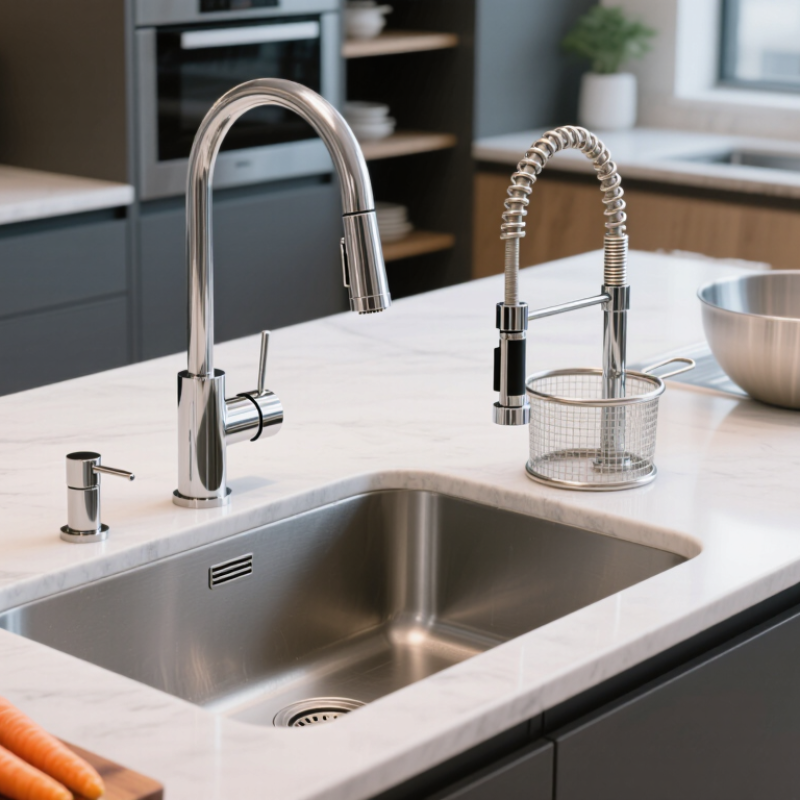
Why Choose a Kitchen Faucet With Sink for Global Buyers?

What Is a Kitchen Faucet With Sink?

What Is a Kitchen Faucet With Sink?

A “kitchen faucet with sink” usually describes a coordinated set, not one molded fixture. It may include a sink basin and faucet in one package, or simply refer to a faucet selected for a particular sink. Check the product listing carefully. In some listings, the drain, strainer, and mounting hardware are separate.

Fit matters. A deck-mounted faucet needs compatible sink holes and enough clearance for its handle and spout. A sink with no faucet holes may require a wall-mounted faucet or a countertop opening. Measure the cabinet, basin depth, and distance to the backsplash before ordering; a tall arc spout can look useful but may splash in a shallow bowl. The U.S. Geological Survey’s 2015 water-use report estimated public-supply domestic use at about 87 gallons per person daily. That figure covers household use overall, not kitchen faucets alone, so it should not be read as a faucet consumption estimate. Still, it shows why practical choices—such as a controllable spray and suitable flow—deserve attention. Details vary. Confirm the included parts and installation dimensions with the seller.

How a Faucet and Sink Combination Works

A kitchen faucet and sink combination works as one coordinated washing station, but the parts still perform separate jobs. The sink basin catches water and directs it toward the drain; the faucet controls flow through a spout and handles or a single lever. Under the counter, hot and cold supply lines connect to the faucet, while a tailpiece and trap carry wastewater away. The faucet’s mounting holes must match the sink deck or countertop. Small mismatch, big headache.

During installation, a plumber checks hole spacing, counter thickness, water pressure, and drain alignment before tightening fittings. A pull-down spray hose needs clear space beneath the basin, or it may snag on stored items.

Seals around the faucet base and drain help limit leaks, though sealant cannot correct a crooked fitting. Run both water temperatures and inspect every connection with a dry tissue; even a slow bead can reveal a loose joint.

For buyers in different regions, thread sizes, water pressure, and plumbing connections may vary. Confirm the product’s dimensions and connection type against the existing kitchen, rather than relying on appearance alone. A deeper sink can reduce splashing, but it may require more bending. That trade-off is easy to overlook. The best pairing depends on daily habits, cabinet space, and access to compatible replacement parts.

Key Benefits for Global Buyers

Why Choose a Kitchen Faucet With Sink for Global Buyers?

For global buyers, a kitchen faucet with sink can simplify purchasing and installation. One coordinated set reduces fitting errors between the basin, faucet holes, and drainage position. This matters when local plumbers work from different standards or limited product drawings. A complete unit also supports clearer budgeting, freight planning, and quality inspection before shipment.

Durability is another practical benefit. Buyers should check the sink material, faucet cartridge, water-pressure range, and included accessories. In coastal areas, corrosion resistance deserves careful attention. In regions with hard water, removable aerators can make cleaning easier. However, a combined set is not perfect for every kitchen. Its dimensions may limit later remodeling. Local plumbing connections can also require extra adapters. Product documents should clearly state measurements, installation steps, maintenance needs, and applicable market certifications.

Tips: Measure the cabinet space first. Confirm drain and water inlet sizes with a local installer. Request clear photos of the underside and connection points. Compare packed dimensions, not only product dimensions. A small mismatch can delay an entire project. I also recommend checking replacement-part availability before ordering. Low purchase cost may become expensive if a cartridge or hose is difficult to replace.

Why Choose a Kitchen Faucet With Sink for Global Buyers?

Water efficiency is an important consideration when selecting a kitchen faucet and sink combination. The chart compares common maximum flow benchmarks using liters per minute, making the data easier to compare across international markets.

Key takeaway: A faucet rated at 5.7 L/min uses approximately 31.8% less water than a 8.3 L/min faucet at the same operating time. At five minutes of daily use, this difference can save about 1,278 liters of water per year.

Data basis: 2.2 US gallons per minute is the U.S. federal maximum for kitchen faucets; 1.5 US gallons per minute is the EPA WaterSense kitchen-faucet benchmark. Values are converted to liters per minute. Local regulations and product specifications may vary.

Important Materials, Features, and Compatibility Factors

Why Choose a Kitchen Faucet With Sink for Global Buyers?

Material choice affects daily performance more than appearance. In kitchen fitting projects, I check the faucet body before judging its finish. Lead-free brass and 304 stainless steel offer dependable strength for regular household use. Stainless steel also resists moisture around the sink rim. However, material labels can be vague. Ask for test reports and clear composition details.

Ceramic cartridges usually provide smoother control and reduce dripping over time. A pull-out or pull-down spray head helps rinse vegetables and clean deep cookware. Useful features include a swivel spout, flexible hose, easy-clean nozzles, and a stable mounting base. Keep it practical. Extra functions may increase repair difficulty. I once selected a stylish model with a short hose, and the spray head barely reached the sink corners.

Compatibility requires careful measurement. Check the sink’s mounting-hole number, diameter, and deck thickness. Confirm the faucet height against nearby cabinets and windows. Measure the water-supply connections, because thread standards vary between markets. Water pressure also matters; a wide spray pattern may feel weak in a low-pressure home. Some installations need an adapter, but improvised fittings can leak. Look for clear installation instructions, replaceable parts, corrosion testing, and potable-water compliance for the destination market. A faucet may fit physically yet fail functionally. That detail deserves more attention.

How to Select the Right Model for Different Markets

Choosing a kitchen faucet with a sink requires market-specific research, not just attractive design. In export projects, I compare water pressure, countertop habits, and installation methods before approving a model. A compact sink may suit urban apartments, while deeper bowls help commercial kitchens. Measure cabinet depth carefully. The faucet must clear nearby windows and wall shelves. Small details often decide whether installers accept the product.

For North American buyers, check hole spacing, pull-down reach, and connection sizes. Many European markets may prefer slim profiles, flexible hoses, and water-saving flow control. In regions with hard water, ceramic cartridges and easy-clean aerators deserve close attention. Coastal areas may need corrosion-resistant finishes. Do not assume one configuration fits every country. It rarely does. Confirm local testing and certification requirements with qualified professionals before shipment. This protects reliability and reduces costly returns.

Tips: Request a sample installation with the actual sink and countertop. Test the spray switch repeatedly. Check whether replacement cartridges are available locally. Include clear diagrams and multilingual instructions when needed. Ask distributors about preferred colors and handle positions. Their feedback is practical evidence. I would also review packaging after a rough transport simulation. Still, a perfect test cannot predict every household. Leave room for honest revisions after field use.

Why Choose a Kitchen Faucet With Sink for Global Buyers? - How to Select the Right Model for Different Markets

Target Market Why Consider a Faucet-and-Sink Set? Useful Sink and Faucet Options Connection and Installation Checks Buyer Checklist
United States and Canada A coordinated set can simplify renovation planning and help match the sink opening, faucet reach, and overall appearance. Single- or double-bowl sinks; stainless steel is common. Consider a pull-down spray faucet and a reach suited to the bowl width. Confirm the number and spacing of sink-deck holes, countertop thickness, supply-line fittings, and local plumbing requirements. Check applicable water-efficiency and plumbing rules, included mounting hardware, drain compatibility, and whether an air gap or soap dispenser requires extra holes.
European Union Buying the components together can make it easier to coordinate compact layouts, finishes, and installation dimensions. Compact or one-and-a-half-bowl configurations; stainless steel and composite options. Choose a swivel spout where it helps serve multiple bowls. Verify the local supply-hose fittings, sink cut-out dimensions, cabinet clearance, and whether the faucet is suitable for the installation type. Confirm applicable national requirements, water-pressure suitability, product documentation, and compatibility with any filtration or hot-water system.
United Kingdom A set can reduce measurement mismatches when replacing both the sink and tap, particularly in fitted kitchen cabinetry. Inset or undermount sink styles, often with a drainer; consider a mixer tap with a spout that reaches the center of the bowl. Check tap-hole size, worktop thickness, drainer orientation, waste outlet position, and the fitting type required for local pipework. Check local water regulations and pressure conditions. In applicable areas, confirm whether the tap needs to meet a specific backflow or plumbing requirement.
Australia and New Zealand A matched sink and faucet can simplify specification for new kitchens and help ensure the spout works with the selected bowl layout. Single or double bowls with practical draining space; pull-out or swivel-spout models can suit different washing tasks. Confirm local fitting sizes, bench thickness, tap-hole requirements, and compatibility with existing hot- and cold-water connections. Check applicable plumbing approvals and water-efficiency requirements in the destination jurisdiction before ordering.
Middle East A combined purchase can help buyers coordinate sink capacity, faucet finish, and installation requirements for residential or project use. Large single or double bowls; select durable finishes and a spout reach that suits the bowl and typical kitchen tasks. Confirm the local pipe connections, operating pressure range, water-temperature conditions, and available cabinet space. Check local certification and project specifications. Where water quality is a concern, review material suitability and maintenance guidance.

Note: Connection types, water-pressure conditions, and regulatory requirements vary by country and sometimes by region. Confirm measurements and local requirements with the installer or relevant authority before purchase.

FAQS

How does a faucet and sink combination work?

The sink basin catches water and guides it toward the drain. The faucet controls water through a spout, handles, or one lever. Supply lines deliver hot and cold water underneath the counter. A tailpiece and trap carry wastewater away.

What should be checked before installation?

Check mounting-hole spacing, counter thickness, water pressure, and drain alignment. Confirm the faucet matches the sink deck. A small mismatch creates major trouble.

How can leaks be detected after installation?

Run both hot and cold water. Place a dry tissue around every connection. Even a slow wet bead can reveal a loose joint. Seals help, but they cannot fix crooked fittings.

Why can a complete sink and faucet set simplify purchasing?

A coordinated set can reduce fitting errors between the basin, faucet holes, and drain. It may also simplify budgeting, freight planning, and inspection. Still, local adapters may be necessary.

What measurements matter for different regions?

Measure cabinet space, mounting holes, drain openings, water inlets, and deck thickness. Confirm thread sizes and connection types with a local installer. Appearance alone can mislead.

Which materials are suitable for regular kitchen use?

Lead-free brass and 304 stainless steel provide dependable strength. Stainless steel also handles moisture around the sink rim. Ask for composition details and test reports, because material labels can be vague.

Which faucet features are useful for daily kitchen work?

A pull-down or pull-out spray head helps rinse vegetables and deep cookware. A swivel spout, flexible hose, and easy-clean nozzles add practical value. Extra features may complicate repairs.

How does sink depth affect comfort and performance?

A deeper basin can reduce splashing and hold larger cookware. However, it may require more bending during washing. That trade-off is easy to overlook. I might still choose the deeper bowl, but not every household should.

What maintenance and replacement issues should buyers consider?

Removable aerators help with hard-water deposits. Ceramic cartridges usually support smooth control and fewer drips. Check replacement-part availability before ordering. A low purchase price can become expensive later.

Can a faucet fit physically but still perform poorly?

Yes. A wide spray pattern may feel weak in a low-pressure home. A short hose may not reach the sink corners. I once overlooked this detail. It was a poor choice.

Conclusion

A Kitchen Faucet With Sink is an integrated or coordinated solution that combines a water faucet with a compatible sink to create a practical, unified washing area. The faucet supplies hot and cold water through selected controls, while the sink supports drainage, food preparation, and daily cleaning. This combination can simplify product selection, installation planning, and space management for residential and commercial projects.

For global buyers, key advantages include coordinated design, efficient installation, easier sourcing, and flexible options for different kitchen layouts. When choosing a model, buyers should evaluate materials such as stainless steel or durable composite finishes, faucet height, spray functions, mounting style, drainage structure, and resistance to corrosion or staining. Compatibility with local plumbing connections, water pressure, countertop dimensions, installation standards, and market preferences is also essential. Selecting the right configuration helps ensure reliable performance, straightforward maintenance, and suitability for diverse regional requirements.


Sophia

Sophia

Sophia is a dedicated marketing professional with an exceptional depth of knowledge about her company's products and services. With a keen understanding of market trends and customer needs, she crafts insightful blog posts that not only inform but also engage readers, enriching the company’s online......