Best Stainless Steel Sink Manufacturers in China?

Time:2026-10-29 Author:Oliver
0%

Choosing among the best stainless steel sink manufacturers in China takes more than comparing catalog photos. A polished showroom image cannot reveal a thin bowl, rough welds, or a drain that sits slightly off-center. Ask about steel grade, sheet thickness, finish consistency, production capacity, and inspection procedures. These details shape how a Stainless Steel Sink performs after years of daily use.

China-based sink manufacturing consultant Lin Wei puts the buying challenge this way: “A good sink is judged not only by its shine, but by the steel, the forming, and the finish you can verify.” Treat that as practical guidance, not a substitute for factory records or product testing. Request material specifications, close-up images of corners and welds, and samples where possible. Check how the manufacturer handles packaging, custom dimensions, and quality issues. Small clues matter.

This guide compares manufacturers through product range, manufacturing capabilities, customization, export experience, and buyer support. It also recognizes a limitation: supplier claims can look similar on paper, while actual production standards may vary between models and batches. That deserves a closer look. A low quote may reflect efficient operations, but it may also mean thinner material or fewer checks. Buyers should verify rather than assume. The strongest choice is the supplier whose claims are specific, documented, and consistent with the sample in hand.
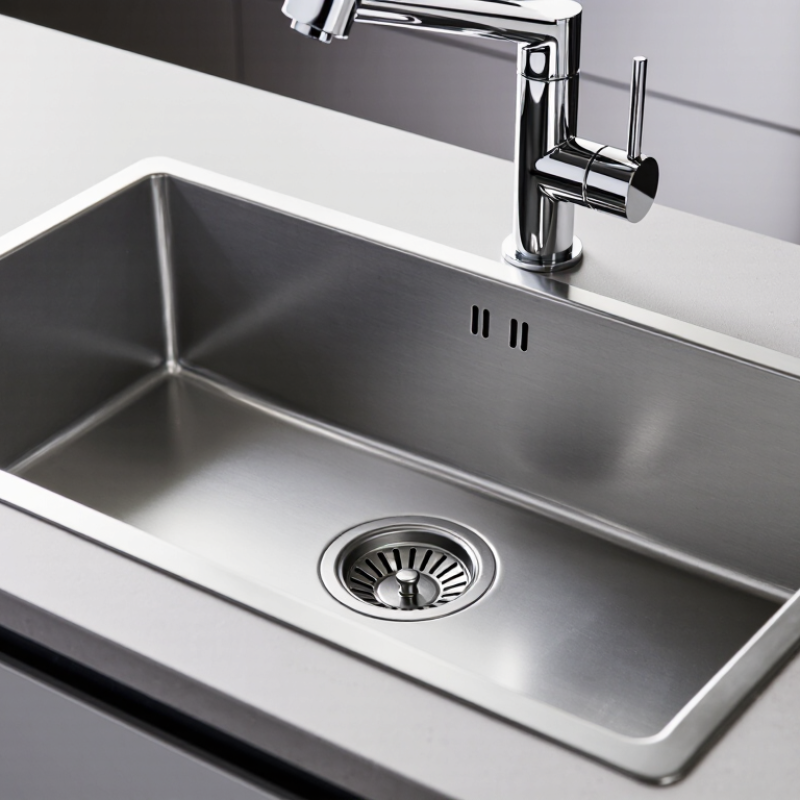
Best Stainless Steel Sink Manufacturers in China?

Understanding China’s Stainless Steel Sink Manufacturing Industry

China’s stainless steel sink industry sits within a broad metal-processing network, supported by coil suppliers, tooling shops, finishing lines, and export logistics. Scale is substantial. World Stainless Association’s Stainless Steel in Figures 2024 reports that China produced 36.676 million tonnes of crude stainless steel in 2023. That was roughly 63% of global output. These figures describe crude steel, not finished sinks; they indicate material availability, not sink quality.

A sink’s performance depends on more than its steel grade. Deep-drawing control affects corner thickness, while weld quality and polishing influence seams and cleanability. Buyers can inspect sample cut edges, bowl depth, drain placement, and underside sound pads. Ask for material certificates and thickness readings from several points, not just one convenient spot. Not every factory controls every step. Some outsource polishing or coating, which can complicate defect tracing. This is easy to overlook. Production scale can support varied dimensions and shorter lead times, but it does not guarantee consistent batches. Requesting a pre-production sample and written inspection criteria is practical, though it adds time.

Key Criteria for Evaluating Sink Manufacturers

A reliable sink manufacturer should be judged by evidence, not polished showroom photos. Ask which stainless steel grade and sheet thickness are used, and request documents that support those specifications. Check the sink’s underside, corners, and drain opening: uneven welds or thin, sharp edges may point to inconsistent workmanship. Small details matter. A sample can look convincing under bright lights, so inspect it in ordinary lighting and feel the rim and bowl surface.

Ask how the factory checks dimensions, surface finish, and drainage across production batches. A shallow bowl or poorly positioned drain can make daily cleaning frustrating. Request a sample, a written specification sheet, and clear information about packaging and lead times.

Be cautious if answers change between sales and technical staff. That does happen. Capacity matters, but a large production line does not guarantee consistent quality.

Compare what the manufacturer promises with what the sample and inspection records actually show. I would not rely on one attractive sample alone; that is an easy mistake to make. Companies should explain how they handle defects and production changes, even when the answer is not perfect.

Leading Stainless Steel Sink Manufacturers in China

Leading Stainless Steel Sink Manufacturers in China

Leading stainless steel sink manufacturers in China typically combine metal forming, welding, polishing, and quality checks in one production process. Their capabilities can vary, so compare more than catalog photos. Ask about steel grade, sheet thickness, bowl depth, and finish consistency. A sample can reveal details that specifications miss, including sharp edges, uneven brushing, or noisy water impact. Details matter. Manufacturers with clear inspection records and stable production processes are easier to assess than suppliers making broad claims. Confirm that drain openings and mounting dimensions match your countertop plan.

Tips: Request a production sample and written material specifications. Check the underside for weld quality and sound-dampening pads. Ask how defects are recorded and handled. Small differences show.

Customization can be useful for kitchens with unusual cabinet sizes, but changes may affect tooling, cost, and lead time. Discuss drawings before approving production, and confirm packaging protects corners during transit. A polished surface may look impressive under showroom lights yet show scratches in daily use. That trade-off is easy to overlook. Compare finishes under ordinary lighting, and base your choice on documented specifications, sample inspection, and communication—not price alone.

Comparing Products, Materials, and Manufacturing Capabilities

Choosing a stainless-steel sink manufacturer in China means comparing more than price and appearance. The World Stainless Association reported 58.4 million tonnes of global stainless-steel melt-shop production in 2023. This indicates a broad materials supply base, not proven sink-making expertise. Ask suppliers to identify steel grades, provide mill certificates, and explain how they verify each shipment. Grade 304 is commonly selected for corrosion resistance; lower-cost alternatives may suit different environments, but need clear specification.

Manufacturing capability shows in the details. Check sample sinks for even bowl depth, smooth corners, consistent welds, and uniform finishing around the drain. Ask how the factory controls sheet thickness, deep drawing, polishing, and final inspection. Request production records and test methods, not just photos. A polished sample can hide uneven material or rushed quality checks. No test proves everything. Compare the same design across suppliers, and clarify what happens when inspection results fall outside agreed limits.

Tips: Request a cut-edge sample and measure its thickness with a caliper. Confirm whether the quoted grade applies to the whole sink, including accessories. Ask for a recent inspection report, plus packaging details; dents can start before installation. Be cautious when specifications are vague.

How to Verify and Select a Chinese Sink Manufacturer

Choosing a Chinese stainless steel sink manufacturer starts with verification, not polished product photos. Check whether the supplier operates a factory or coordinates production elsewhere. Request a live video tour showing pressing equipment, welding stations, polishing lines, and finished-goods storage. Ask for the stainless steel grade, sheet thickness, and material certificates for the specific production batch. Paperwork matters, but it should match the sample.

Inspect a sample under bright light. Look for uneven polishing, sharp edges, pinholes near welds, and a drain opening that fits standard hardware. Use a caliper to check thickness at several points; one measurement can mislead. Ask how the sink is tested for leakage and surface defects, and request dated records. Small details count. Confirm production capacity, lead times, packaging, and who handles rejected units in writing. Speak with recent buyers if possible, but treat references as one signal, not proof. A sample may be excellent while bulk production varies. That risk deserves a direct question. Ask whether batch inspections are documented and whether you can review the inspection criteria before placing an order.

Best Stainless Steel Sink Manufacturers in China? — How to Verify and Select a Chinese Sink Manufacturer

Use this due-diligence checklist to compare suppliers. The specification ranges below are screening examples, not a claim that every sink or market requires the same specification.

Evaluation Dimension What to Check Evidence to Request Practical Acceptance Guide Warning Signs
Manufacturer Identity and Factory Confirm the legal entity, registered business scope, manufacturing address, and whether production is performed in-house or subcontracted. Business registration documents, factory address, production-process list, and a live video tour or independent factory-audit report. Verify that the contracting entity, invoice issuer, and receiving bank account are consistent. Confirm that the site shown is equipped for the processes in the order. Only a trading address is provided; factory access is refused; or documents show inconsistent legal names or addresses.
Stainless Steel Grade Specify the grade for each sink component, such as 304 or 316. Grade selection should reflect the intended environment and exposure. Material test certificate linked to the production batch, plus independent PMI or laboratory testing for a pre-shipment sample where appropriate. For reference, ASTM A240/A240M lists Type 304 with 18.0–20.0% chromium and 8.0–10.5% nickel; Type 316 also contains molybdenum. Confirm the applicable standard and edition with the buyer’s test plan. Grade is described only as “food grade” or “stainless steel”; certificates cannot be traced to the supplied material or batch.
Sheet Thickness Set the required thickness for the bowl, rim, and other formed parts separately. Clarify whether the figure is nominal or a measured minimum. Approved drawings and specifications, incoming-coil records, and thickness measurements taken at agreed locations before or after forming. A buyer may use 0.8–1.2 mm as an initial screening range for many sink-bowl specifications, then finalize the requirement based on design, forming, and performance tests. This is not a universal standard. Thickness is advertised without a measurement method, measurement location, or allowance for coating and finishing.
Applicable Product Standard Identify the target market’s applicable requirements for dimensions, drainage, safety, and performance. Test reports for the relevant sink model and market, with model number, test methods, laboratory details, and report date. Potential references include EN 13310 for kitchen sinks and ASME A112.19.3/CSA B45.4 for stainless-steel plumbing fixtures. Confirm applicability with the buyer or local compliance specialist. A generic certificate is presented as proof of compliance for every model, or the report does not identify the tested product.
Welding and Forming Quality Inspect corners, seams, drain openings, bowl transitions, and rim flatness. Check for cracks, pinholes, sharp edges, and visible distortion. First-article samples, approved drawings, production inspection records, and agreed visual acceptance criteria. Approve a production sample before mass production. Define critical dimensions, appearance limits, and inspection sampling in the purchase specification. Samples are polished to a higher standard than production units, or inspection criteria are not documented.
Drainage and Leak Testing Check drain fit, water flow, bowl slope, and leak integrity under the agreed test procedure. Model-specific test records, drain-component specifications, and documented inspection results from the production lot. Agree on a repeatable water-fill or leak-test method and the inspection rate before ordering; verify a production sample against the approved drawing. Supplier relies on verbal assurances or cannot show test records tied to a production lot.
Quality Management Check whether the supplier has a functioning quality system and controls for incoming material, in-process production, and final inspection. Current ISO 9001 certificate, certificate scope, issuing body, audit information, and sample inspection records. Verify the certificate directly with its issuer or an appropriate accreditation database. ISO 9001 certification concerns a management system; it is not product certification. Expired or unverifiable certificates, a scope unrelated to the supplied product, or no traceable inspection records.
Packaging, Capacity, and Delivery Confirm packaging protection, carton configuration, production lead time, monthly capacity, and the plan for handling defects or shortages. Packaging specification, packing-list example, capacity plan, delivery schedule, and written quality-claim procedure. Approve packaging through a sample or transit-risk review. Put lead time, inspection rights, corrective actions, and remedies in the purchase contract. Capacity is stated without supporting production information, or packaging and defect handling are left undefined.

Selection tip: Compare suppliers using the same drawing, material specification, test plan, and inspection criteria. Treat certificates and factory claims as items to verify, not as substitutes for a representative sample and documented quality checks.

FAQS

What should I verify before choosing a sink manufacturer?

Ask for the stainless steel grade, sheet thickness, and documents for the production batch. Compare the paperwork with a physical sample.

How can I check whether a supplier operates its own factory?

Request a live video tour. Look for pressing equipment, welding stations, polishing lines, and finished-goods storage. A polished presentation alone proves little.

What details should I inspect on a sink sample?

Check the underside, corners, rim, welds, and drain opening. Feel for sharp edges and uneven surfaces. Small details count.

How can I confirm the sink’s thickness?

Use a caliper at several points, not just one. A single measurement can give a misleading impression.

What production checks should the manufacturer explain?

Ask how it checks dimensions, surface finish, drainage, leaks, and surface defects. Request dated inspection records and the inspection criteria.

Why should I ask about the drain and bowl design?

A shallow bowl or poorly placed drain can make cleaning frustrating. Check that the opening fits standard hardware.

What should I confirm about orders and packaging?

Get production capacity, lead times, packaging details, and defect handling in writing. Answers that change between staff members deserve follow-up.

Is one good sample enough to judge bulk production?

No. Batch quality can vary, even when a sample looks excellent. Ask whether inspections are documented; I might still miss something, so review the records carefully.

Conclusion

China has developed a broad Stainless Steel Sink manufacturing industry, with factories offering a range of designs, production methods, and customization options. Choosing a suitable supplier involves more than comparing prices: buyers should assess material grades, sink construction, finish quality, production capacity, quality-control procedures, communication, and experience serving similar markets. Understanding these factors helps narrow the field and identify manufacturers whose capabilities match a project’s requirements.

When comparing suppliers, review product specifications, samples, manufacturing processes, and available customization, while checking that stated capabilities are supported by clear documentation. Ask about inspection procedures, production timelines, packaging, and after-sales support, and communicate requirements in writing. Evaluating several manufacturers against the same criteria can make differences easier to see and help buyers select a reliable partner for their intended products and order volumes.


Oliver

Oliver

Oliver is a seasoned marketing professional with a wealth of expertise in driving brand awareness and engagement. With a deep understanding of our company's product offerings, he consistently delivers high-quality content that enriches our professional blog. His insights not only shed light on......