Choosing the right Undermount Sink manufacturer in China requires more than comparing prices. It requires careful attention to materials, fabrication, testing, and long-term supplier reliability. A polished showroom sample can hide uneven edges, weak mounting rails, or drainage problems. Those details matter after installation.
As kitchen designer Susan Serra, CKD, has said, “The sink is one of the hardest-working elements in a kitchen.” That practical view should guide every supplier evaluation. A dependable factory should explain its stainless steel grade, stone composition, welding process, surface treatment, and quality-control procedures. It should also provide clear product drawings, installation guidance, and responsive communication.
Experience changes the checklist. A sink may look perfect under bright factory lights, yet show scratches beside a window. Small errors become expensive later. For this reason, buyers should examine sample consistency, sound-deadening pads, overflow design, corner radius, and waste-fitting compatibility. Certifications can support confidence, but they never replace physical inspection.
This guide explores China’s leading Undermount Sink manufacturers and suppliers through a practical purchasing lens. It considers factory capability, customization, production capacity, export experience, packaging, and after-sales support. Some suppliers excel at large-volume orders. Others suit boutique projects and unusual dimensions. Neither choice is automatically better.
There is no flawless shortlist. Supplier information can change, and published claims require verification. Buyers should request current certificates, recent samples, inspection records, and references before committing. A thoughtful decision may take longer. That is usually cheaper than replacing a poorly fitted sink.
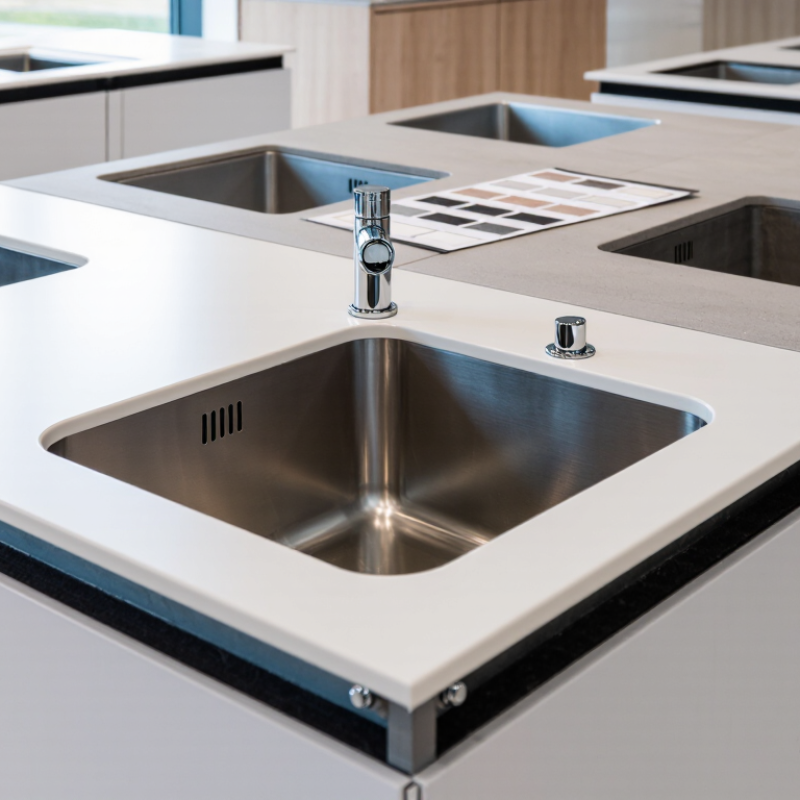
An undermount sink is installed beneath the countertop, not above it. Its rim stays hidden under stone, quartz, or solid-surface material. This creates a smooth work area, so crumbs and water can be pushed directly into the basin. The design also gives kitchens a clean, spacious appearance. However, accurate cutting and strong adhesive support are essential. A small installation error can cause leaks or uneven edges.
China has become a practical sourcing option for undermount sinks because many manufacturers offer stainless steel, granite composite, and ceramic models. Buyers can often request different bowl depths, drain positions, corner radiuses, and surface finishes. Experienced suppliers usually provide technical drawings, material specifications, sample approvals, and production photos. These details matter more than attractive catalog images. Check steel thickness, welding quality, sound insulation, overflow design, and packaging protection before placing an order. A low price is not always a saving.
Tips: Ask for a physical sample and inspection report. Confirm countertop compatibility before production. Discuss tolerances in writing. Also, test drainage with real water; polished surfaces can still drain poorly. I have seen specifications look excellent but miss practical details, especially around clips and waste fittings. That weakness deserves honest review. Compare several suppliers, verify their factory experience, and keep every approved measurement in the purchase record.
An undermount sink is installed beneath the countertop, creating a seamless edge that makes wiping water and debris directly into the bowl easier. The chart shows common nominal sink widths and the typical minimum cabinet widths required for planning. Actual requirements vary by bowl shape, mounting rail design, countertop cutout, and manufacturer specifications, so buyers should confirm the installation drawing before production.
Evaluating China’s top undermount sink manufacturers requires more than comparing catalogue photos. The 2024 U.S. Kitchen Trends Study reported undermount sinks as the leading sink style in renovated kitchens. This demand makes quality control important. Check the manufacturer’s stainless-steel grade, usually 304 for residential use. Ask for mill certificates, thickness records, and welding inspection results. A polished sample can hide weak corners.
Use factory evidence, not promises. Review production-line videos, inspection reports, and recent export records. UN Comtrade data for HS 7324 can help verify a supplier’s international shipping experience, although this code covers several sanitary products. Request water-leak testing, sound-deadening details, overflow options, and exact cutout drawings. ISO 9001 certification supports process control, but it does not guarantee every sink is flawless. I would still inspect random units before shipment.
Tips: Compare three samples from different production batches. Measure bowl depth, corner radius, flatness, and coating consistency. Confirm packaging with photos after drop testing. Ask how defects are recorded and corrected. A reliable supplier should explain tolerances clearly, not only quote a low price. Also check whether replacement parts and technical documents are available. My own caution: factory scale can impress buyers, yet small details often decide installation success.
China’s undermount sink supply chain is concentrated near stainless steel, appliance, and hardware clusters. Guangdong, especially Foshan, Zhongshan, and Jiangmen, supports dense networks for pressing, welding, polishing, and customized kitchen products. Zhejiang, including Ningbo and Taizhou, is strong in metal forming, tooling, export logistics, and private-label production. Fujian also serves buyers seeking flexible fabrication and competitive batch sizes.
Material access matters. The World Stainless Association reported roughly 37 million tonnes of crude stainless steel production in China during 2023, representing more than half of global output. This industrial base helps suppliers source 304 stainless steel, control thickness, and negotiate stable coil prices. Yet cheap material does not guarantee a durable sink. Buyers should request mill certificates, thickness records, weld inspection images, and salt-spray or drainage test results.
Capabilities vary widely.
Experienced factories can produce deep-drawn bowls, tight corner radii, sound-deadening pads, overflow systems, and brushed or satin finishes. Some suppliers now add automated laser welding and coordinate measuring equipment. Others still rely heavily on manual polishing. That difference appears around the drain opening, rim flatness, and installation clips. Industry quality guidance from ISO 9001-based production systems encourages documented inspection, but certification alone proves little about daily control. A practical audit should review random finished units, not only showroom samples. One overlooked issue remains packaging: a flawless sink can arrive with scratched edges after weak corner protection.
China’s leading undermount sink manufacturers usually work with 304 stainless steel, 316 stainless steel, fireclay, and granite composite. Material choice affects durability, weight, cleaning, and installation cost. For busy kitchens, 304 stainless steel offers strong corrosion resistance and practical maintenance. In coastal areas, 316 steel may provide better protection against salty air. However, it costs more. Thickness matters too. A 1.2-millimeter bowl feels steadier than a thin, flexible model.
Design details shape daily use. Deep single bowls fit large pans, while double bowls separate washing and rinsing. Zero-radius corners look sharp but need careful cleaning. Gently rounded corners are less dramatic and more forgiving. Workstation sinks can include sliding grids, colanders, and cutting boards. Sound-absorbing pads reduce vibration and water noise. Small details count.
Reliable suppliers should provide material test reports, dimensional drawings, drainage tests, and inspection records. Buyers can request compliance with standards such as EN 13310 or ASME A112.19.3/CSA B45.4, depending on the target market. Custom options may include bowl width, depth, drain position, overflow design, surface finish, logo-free packaging, and accessory selection. Before mass production, a physical sample deserves careful checking. A polished finish can reveal scratches easily. A darker composite surface may hide marks, but it can show mineral stains. No option is perfect. Clear communication prevents expensive surprises.
China Top Undermount Sink Manufacturers and Suppliers
Selecting a Chinese undermount sink supplier requires more than comparing online prices. I usually begin with the sink’s steel grade, thickness, basin depth, and edge finish. Ask for a technical sheet with exact measurements, tolerances, and installation drawings. A clear answer shows practical knowledge.
Request a factory video, business license, export history, and recent production photos. Then verify the legal company name through an official business registry or an independent inspection service. A polished catalog can mislead. I once trusted attractive photographs and overlooked the drain opening size. That mistake delayed a countertop project.
Order a physical sample before placing a bulk purchase. Check welding lines, sound-deadening pads, corner radius, overflow details, and surface consistency under strong light. Measure the sample yourself. Do not rely only on stated specifications. Confirm packaging with carton dimensions, foam protection, labels, and spare accessories. Discuss payment terms, delivery time, shipping documents, and responsibility for defects in writing. A pre-shipment inspection can test quantity, dimensions, finish, and packaging. Keep signed records and approved samples.
Small details matter. Ask how rejected units are handled. Ask who answers technical questions after payment. A capable supplier should explain quality controls without avoiding difficult questions. Product quality may still vary between batches, so inspection should not stop after the first order. My own purchasing process remains imperfect; I sometimes give too much attention to price. A reliable decision balances cost, evidence, communication, and long-term consistency.
Guangdong supports pressing, welding, polishing, and kitchen customization. Zhejiang is strong in tooling, metal forming, logistics, and private-label production. Fujian often handles flexible fabrication and smaller batches. Capabilities still vary.
Common materials include 304 stainless steel, 316 stainless steel, fireclay, and granite composite. Material choice affects corrosion resistance, weight, cleaning, and installation cost. Coastal kitchens may benefit from 316 steel. It costs more.
A 1.2-millimeter bowl usually feels steadier than a thinner model. Thinner steel may flex during installation or daily use. Ask for thickness records, not only catalog claims. Numbers can be misunderstood.
Deep single bowls fit large pans, while double bowls separate washing and rinsing. Rounded corners are easier to clean than sharp corners. Workstation models may include grids, colanders, and cutting boards. Small details matter.
Request material reports, dimensional drawings, drainage tests, and inspection records. Review random finished units instead of showroom samples alone. Check welds, rim flatness, drain openings, and installation clips. Certification alone proves little.
Inspect the sample under strong light for scratches and uneven polishing. Measure bowl depth, thickness, drain position, and edge dimensions yourself. Check sound-deadening pads and overflow details. Do not rely only on stated specifications.
Confirm carton dimensions, foam protection, corner guards, labels, and spare accessories. Weak packaging can scratch a flawless sink before arrival. Ask for packaging photos and pre-shipment inspection records. Packaging is easy to overlook.
Record payment terms, delivery dates, shipping documents, approved samples, and defect responsibilities. Include finish requirements, tolerances, packaging details, and inspection procedures. Ask how rejected units are handled. I still sometimes focus too much on price.
This guide explains what an Undermount Sink is and why many buyers consider Chinese manufacturers and suppliers for this product. Installed beneath the countertop, an Undermount Sink creates a clean, modern appearance and makes it easier to wipe water and debris directly into the basin. China offers a broad manufacturing network, competitive production costs, flexible order quantities, and extensive experience with stainless steel, granite composite, ceramic, and other materials.
The article also outlines how to evaluate suppliers by reviewing factory capabilities, material quality, production equipment, inspection procedures, certifications, and customer service. It introduces major manufacturing regions and compares their strengths in design development, mass production, customization, and export support. Buyers will also learn how to assess bowl configuration, thickness, surface treatment, drainage design, packaging, and quality standards. Finally, it provides practical steps for requesting samples, confirming specifications, verifying supplier information, negotiating terms, and arranging secure purchasing and shipment.

YiGeng