A Farmhouse Sink is a kitchen sink with a visible front panel, often called an apron front. Unlike an undermount sink, it extends slightly beyond the surrounding cabinets. That exposed edge creates a strong visual feature beneath the countertop. It can also make washing large cookware feel less cramped.
Buyers often choose this design for its generous basin space and familiar, practical appearance. A deep bowl can hold roasting pans, cutting boards, and tall pots. The front position may reduce the need to lean forward while cleaning. However, comfort depends on the sink’s height, cabinet design, and the user’s body position. Small details matter.
Installation requires more planning than many homeowners expect. Cabinet supports must carry the sink’s weight, especially with water and dishes inside. Professional installers usually check measurements, countertop openings, plumbing access, and manufacturer instructions. Fireclay, stainless steel, and composite models also differ in care, durability, and maintenance needs. A glossy white surface may show marks quickly. Some buyers accept that trade-off for its traditional character.
It is not a perfect choice. Splashing can increase around the exposed front, and replacement may require cabinet adjustments. Reliable decisions come from comparing daily habits, kitchen size, material specifications, and installation costs. A farmhouse-style sink can become a lasting centerpiece, but only when appearance and practical demands receive equal attention.
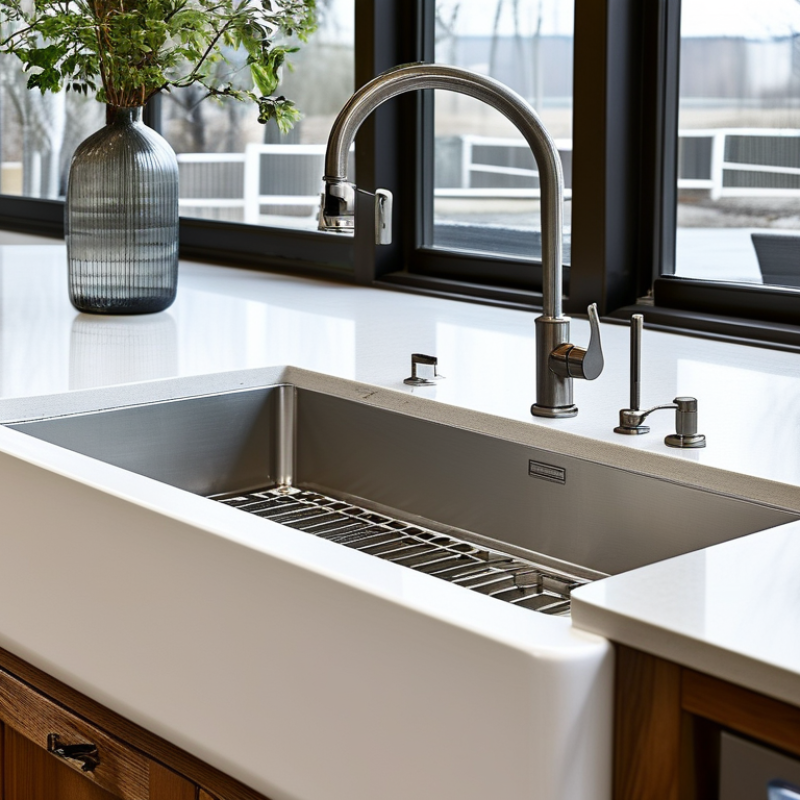
A farmhouse sink is a kitchen sink with an exposed front panel, called an apron. Unlike an undermount sink, its front remains visible beneath the countertop. This structure creates a strong visual feature and reduces the reach across the counter. The basin is usually deep, giving users room to wash large pans, baking trays, and tall pots. It feels practical.
Sometimes, almost too practical.
Key design features include a broad front, generous basin depth, and simple, durable surfaces. Common materials include fireclay, stainless steel, porcelain, and composite stone. Fireclay offers a smooth, traditional appearance, but it can be heavy and may chip after a hard impact. Stainless steel handles busy kitchens well, although water marks can appear quickly. Rounded interior corners make cleaning easier. A flat base can support dishes, but it may hold standing water.
Buyers often choose this sink for comfort and visual character. The front panel can reduce contact with the cabinet edge during daily washing. However, installation needs careful planning. The cabinet may require extra support, and the countertop cutout must match exact measurements. A deep basin can also strain shorter users. That detail is easy to overlook. In practice, the best choice depends on height, cooking habits, material care, and available cabinet space.
A farmhouse sink, also called an apron-front sink, has a visible front panel that extends beyond the countertop. This design differs sharply from an undermount sink, which sits beneath the counter edge. A top-mount sink overlaps the countertop from above. These installation differences change both appearance and kitchen planning.
Farmhouse sinks are often deeper and wider than standard kitchen sinks. They can hold large pans, baking trays, and tall cooking pots with less splashing. However, their size may reduce cabinet storage below. The supporting cabinet may also need careful modification. A heavy ceramic model requires stronger support than a lighter stainless-steel basin. Poor planning can cause cracks, uneven doors, or uncomfortable working height.
The exposed front creates a furniture-like appearance, but it also needs regular cleaning. Water, soap, and food particles can collect along the lower edge. Unlike some conventional sinks, the front panel remains visible, so scratches and stains are easier to notice. The deep basin can help with washing, though shorter users may find it slightly awkward.
Tips: Measure the cabinet, countertop opening, and user height before choosing. Check the sink’s actual interior depth, not only its outside dimensions. Leave space for plumbing adjustments. I once underestimated that detail. A beautiful sink can still feel wrong when the faucet reach, drain position, or nearby dishwasher is poorly planned. Temperature changes may also affect some materials, so gradual heating and cooling is safer.
| Comparison Dimension | Farmhouse Sink | Other Common Kitchen Sinks | Why Buyers May Choose the Farmhouse Style |
|---|---|---|---|
| Front Design | Distinctive Feature Has an exposed front panel, commonly called an apron front, that replaces part of the cabinet-facing area. |
Top-mount and undermount sinks are usually concealed by the countertop edge. A flush or integrated sink may have a more continuous countertop appearance. | Creates a prominent architectural focal point and can complement traditional, country, transitional, and contemporary kitchens. |
| Typical Width | Common residential widths are approximately 30–36 inches, although smaller and larger models are available. | Many standard kitchen sinks measure approximately 24–36 inches wide, depending on the cabinet and bowl configuration. | The broader format can provide more usable washing space while still fitting many standard kitchen layouts when the cabinet is properly prepared. |
| Bowl Configuration | Available as a single bowl, double bowl, low-divider bowl, or workstation-style sink. | Also available in single- and double-bowl designs; configuration depends on the sink type, cabinet width, and intended use. | A deep single bowl is useful for washing large cookware, baking sheets, and oversized serving dishes without a center divider. |
| Bowl Depth | Many models are approximately 8–10 inches deep, though actual depth varies by design and installation requirements. | Residential sinks commonly fall within a similar general depth range, but some compact or shallow models are designed for specific spaces. | A deep basin can hold more dishes and reduce splashing during large cleanup tasks. Users should consider bending comfort and reach before selecting an extra-deep model. |
| Installation | Requires an apron-front cabinet or cabinet modification. The sink may be installed as undermount, flush mount, or another manufacturer-specified configuration. | Top-mount models sit on the countertop, while undermount models attach beneath the countertop opening. Both are generally planned around conventional cabinet layouts. | Buyers who are remodeling can coordinate the cabinet, countertop, and sink as one design. Existing kitchens may require additional carpentry and countertop work. |
| Countertop Relationship | The front apron is visually separate from the countertop, while the rim may be exposed or concealed depending on the installation style. | Top-mount sinks have a visible rim over the countertop. Undermount sinks create a continuous countertop edge around the basin. | Offers a furniture-like appearance and can make the sink area feel more intentional than a conventional drop-in installation. |
| Cabinet Requirements | Often needs a specialized sink base or a modified standard base cabinet. The false drawer front and supporting structure may need adjustment. | Standard sink-base cabinets are commonly designed for top-mount or undermount installations, subject to the sink’s cutout and support requirements. | It can be a strong choice for new construction or a full kitchen renovation, but buyers should verify cabinet compatibility before purchase. |
| Materials | Common materials include fireclay, stainless steel, cast iron with an enamel coating, copper, and composite materials. | The same broad material categories are available in top-mount and undermount formats, depending on the design. | Material choice allows buyers to balance appearance, weight, durability, cleaning needs, and budget rather than choosing only by shape. |
| Cleaning Access | A wide single basin is easy to sweep cookware into, but the exposed front and deep corners may require regular wiping. | Top-mount rims can collect residue around the raised edge. Undermount edges are easier to wipe from the countertop into the bowl but require a properly sealed installation. | Buyers often prefer the open basin for large cleanup jobs, while the final cleaning experience depends on bowl corners, surface finish, and installation quality. |
| Large-Cookware Handling | A wide, deep single bowl can accommodate large pots, roasting pans, and baking trays more comfortably than a divided bowl. | Double-bowl sinks separate washing and rinsing but may limit the usable width of each compartment. Large single-bowl options offer similar capacity. | Particularly attractive to buyers who cook frequently, entertain, or regularly clean oversized cookware. |
| Noise and Weight | Sound and weight vary by material. Thick fireclay and cast iron are heavy; stainless steel may require sound-dampening pads or coating. | Material has the same major effect on noise and weight in other sink styles. Cabinet and countertop support must match the selected sink. | Buyers can select a material for a quieter, more substantial feel, but heavy models require careful delivery, installation, and structural support planning. |
| Maintenance Considerations | Use non-abrasive cleaners suited to the material. Avoid impact, harsh chemicals, and sudden temperature changes when the manufacturer advises against them. | Maintenance also depends on material and finish. Stainless steel may show water spots or scratches, while enamel and fireclay require care to prevent chips. | Farmhouse sinks can remain attractive for many years when the material is matched to the household’s cleaning habits and cooking routine. |
| Best Fit for Buyers | Homeowners who value a visible design feature, a spacious basin, and a renovation plan that can accommodate specialized cabinetry. | Buyers prioritizing simpler installation, a concealed sink front, lower structural demands, or a conventional countertop and cabinet layout. | The choice is strongest when visual character and large-basin utility are more important than the simplest installation process. |
| Planning note: Dimensions, cabinet requirements, bowl depth, mounting method, and support details vary by sink design and manufacturer specifications. Confirm the sink cutout, cabinet opening, countertop thickness, faucet configuration, and required support before installation. | |||
A farmhouse sink, or apron-front sink, exposes its front panel beneath the countertop. Buyers often choose it for easier access and a strong visual focal point. Common materials include fireclay, stainless steel, cast iron, and composite stone. Fireclay offers a smooth, traditional surface, but dropped cookware can chip its finish. Stainless steel is lighter and more forgiving, although water spots appear quickly.
Sizes usually range from 30 to 36 inches wide, with depths near 9 or 10 inches. A 30-inch bowl suits compact kitchens, while a 36-inch model handles large roasting pans. Measure the cabinet first. A sink cannot compensate for a narrow cabinet. The 2024 Houzz U.S. Kitchen Trends Study reported that 63% of renovating homeowners selected undermount sinks, showing how strongly clean countertop lines influence current design choices. Farmhouse sinks require different support, however.
Installation options include undermount, flush-mount, and top-mount configurations. Undermount installation places the counter edge above the basin, making crumbs easier to sweep inside. Flush mounting creates a nearly level transition but demands precise fabrication. Top-mount designs can simplify replacement work, yet their visible rim may collect moisture. The National Kitchen and Bath Association continues to identify durable, easy-clean surfaces as major kitchen priorities in its design trend reporting. One practical warning remains: farmhouse sinks are heavy. Cabinet reinforcement, accurate drain alignment, and waterproof sealing matter more than decorative appeal. Even careful measurements can fail when walls are uneven.
A farmhouse sink, also called an apron-front sink, has a visible front panel beneath the countertop. Buyers often choose it for comfort, appearance, and practical workspace. The wide basin gives more room for roasting pans, tall pots, and bulky dishes.
Less splashing.
Its forward position can also reduce reaching, which some homeowners notice during long meal preparations.
Homeowners often like the sink’s warm, substantial appearance. It can make a new kitchen feel more established, especially with wood cabinetry and simple hardware. However, installation requires careful planning. The cabinet must support the sink’s weight, and the countertop opening needs precise measurements. A professional installer should also inspect plumbing clearance and floor strength.
It is not a simple swap. Measure twice.
Buyers may consider farmhouse sinks attractive during resale because they suggest a considered kitchen design. That appeal is not guaranteed, though. Local preferences, material quality, and overall maintenance still matter. Smooth surfaces usually clean more easily than heavily textured ones, while pale finishes may show stains sooner. During one kitchen renovation, I underestimated how much a deep basin could affect faucet reach and drainage. That mistake was avoidable. Daily habits should guide the choice, including washing large cookware, protecting fragile dishes, and cleaning the exposed front panel.
A farmhouse sink, also called an apron-front sink, extends beyond the cabinet face.
Its exposed front creates a strong focal point in traditional and modern kitchens. However, appearance should not lead the buying decision. The cabinet must support the sink’s weight, especially when it holds water, dishes, and a heavy pan. Stone or fireclay models can be surprisingly difficult to lift.
Measure carefully before ordering. The sink’s width, depth, and front apron must match the cabinet opening. A few millimeters can create expensive installation problems.
Check the countertop cutout, faucet position, plumbing location, and dishwasher clearance. Deeper basins may reduce bending, but they can also strain shorter users. Water may splash onto the apron during quick rinsing. It happens more often than showroom displays suggest.
Daily maintenance also deserves attention. Some finishes reveal scratches, mineral spots, or stains more clearly than expected.
A stainless surface can tolerate busy cooking, while a ceramic surface may need gentler cleaning products. Avoid assuming every cleaner is suitable; always follow the material’s care instructions.
The sink may require custom cabinet changes, stronger supports, and professional fitting, increasing the total cost. I once underestimated the clearance needed for a large roasting pan. That small oversight made the sink less convenient than planned.
Buyers should compare real cookware sizes, cleaning habits, and household height before choosing a deep apron-front design.
: It has an exposed front panel that extends beyond the cabinet face. This creates a furniture-like appearance. An undermount sink stays beneath the countertop edge.
Often, yes. They are commonly 30 to 36 inches wide and about 9 or 10 inches deep. A wide basin can hold roasting pans, baking trays, and tall pots. Large size matters.
Common choices include fireclay, stainless steel, cast iron, and composite stone. Fireclay feels smooth but may chip if cookware falls. Stainless steel is lighter but shows water spots easily.
It can. The deep basin and supporting structure may occupy space below the countertop. Cabinet doors might need modification. Check the internal cabinet height before ordering.
Measure the cabinet opening, countertop cutout, sink depth, and front apron height. Also check faucet reach, drain placement, plumbing space, and dishwasher clearance. A few millimeters can matter.
Professional fitting is often helpful because these sinks can be heavy. The cabinet may need reinforcement, waterproof sealing, and accurate drain alignment. Uneven walls can complicate installation.
Not always. A deep basin may reduce bending for taller users. Shorter users may find the bottom difficult to reach. Test the interior depth, not only the outside size.
Clean the front regularly because water, soap, and food particles remain visible. Some finishes reveal scratches, mineral spots, or stains quickly. Use only cleaners suited to the material.
The sink may require custom cabinet work and increase the total installation cost. Water can splash onto the apron during quick rinsing. I once underestimated roasting-pan clearance. That small mistake reduced convenience.
A Farmhouse Sink is a kitchen sink recognized by its exposed front panel, known as an apron front, which extends slightly beyond the surrounding cabinetry. Its deep basin and spacious design make it practical for washing large cookware, dishes, and produce. Unlike standard drop-in or undermount sinks, it becomes a visible architectural feature and may require customized cabinet support. Farmhouse sinks are commonly made from materials such as fireclay, porcelain, stainless steel, or composite, and they are available in different widths, depths, and single- or double-basin configurations. Installation options depend on the countertop, cabinetry, and sink material.
Homeowners and buyers often choose a Farmhouse Sink because it combines useful capacity with a distinctive, welcoming appearance that can complement traditional, modern, or transitional kitchens. However, buyers should also consider its weight, installation cost, cleaning needs, and susceptibility to scratches, stains, or chips depending on the material. Careful measurements and professional installation can help ensure proper fit, long-term durability, and comfortable everyday use.

YiGeng