Choosing the best kitchen sink and faucet begins with daily evidence, not showroom shine. A sink meets knives, hot pans, coffee grounds, and rushed rinsing every day. The faucet determines reach, spray accuracy, water control, and cleaning comfort. Together, Kitchen Sinks And Faucets influence kitchen workflow more than their polished surfaces suggest.
The National Kitchen & Bath Association’s 2024 Kitchen Trends Report highlights multifunctional work zones, sustainability, and practical storage as continuing renovation priorities. These findings make sink and faucet selection a performance decision, not merely a style decision. The U.S. Environmental Protection Agency’s WaterSense program states that certified kitchen faucets use no more than 1.5 gallons per minute. That limit can reduce flow by 30% compared with standard 2.2-gallon-per-minute models. Real-world performance still depends on pressure, aerator design, and household habits. Numbers help, but they do not wash a muddy pan.
A deep single-bowl sink may simplify large cookware, while a divided basin can separate washing from rinsing. An undermount edge offers cleaner counter wiping, but installation requires suitable countertop material. Pull-down faucets improve reach, although a heavy spray head can feel tiring after repeated use. I have seen attractive fixtures disappoint when handles strike a backsplash or the spout misses the drain. This guide compares materials, dimensions, mounting methods, water efficiency, warranty terms, and repair access. No single combination suits every kitchen, and that limitation deserves honest attention.
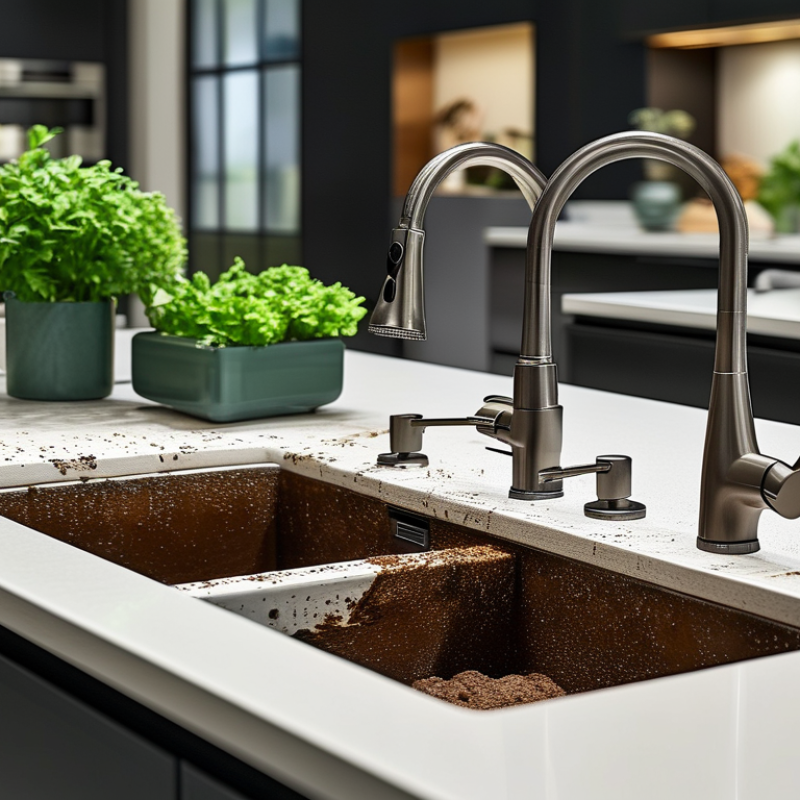
A kitchen sink is the work zone; a faucet is its control point. The sink holds dishes, rinses produce, and manages messy cooking tasks. The faucet controls water direction, temperature, reach, and daily comfort. Their roles overlap, but they are not interchangeable.
Common sink types include top-mount, undermount, farmhouse, and integrated models. Top-mount sinks suit many existing counters and simplify replacement. Undermount designs create a cleaner edge for wiping crumbs directly into the basin. Single-bowl sinks offer space for large pans. Double-bowl sinks separate washing and rinsing. Faucet types include pull-out, pull-down, bridge, and touch-activated designs. A pull-down spray head feels useful beside a deep basin, but its hose may wear faster. That detail is easy to overlook. The National Kitchen & Bath Association’s 2024 Kitchen Trends Report continues to identify practical storage and functional work zones as major kitchen priorities. The sink and faucet should support that workflow, not merely match the finish.
Tips: Measure the counter hole, sink depth, backsplash clearance, and faucet reach before buying. Check the faucet’s flow rate, spray-switch feel, and hose return. The U.S. Environmental Protection Agency reports that faucets account for about 15% of indoor household water use. Efficient flow can reduce waste, but lower flow may feel weak during heavy rinsing. Test the balance between conservation and performance. I have seen attractive combinations fail because the spout stops short of the drain. A beautiful finish cannot correct poor reach. EPA WaterSense guidance also recommends repairing drips promptly, since small leaks become expensive over time.
Kitchen sinks handle washing, rinsing, draining, and food preparation, while faucets control water delivery. The best combination depends on bowl layout, mounting space, hole configuration, and daily use.
How to read the chart: Single-hole faucets usually need one deck hole, centerset and widespread faucets generally use three, bridge faucets commonly use two, and wall-mount faucets require no countertop or sink-deck holes. Always confirm the sink or countertop hole spacing before choosing a faucet.
The best sink is not the largest one. It is the one that fits your cabinet, work habits, and countertop. Material comes first. Stainless steel handles heat, impact, and daily abuse with little drama. Composite sinks reduce visible scratches, but dark finishes can show mineral deposits. Fireclay offers a crisp appearance, yet dropped cookware may chip the surface. The catch? Every material has a weak point. Houzz’s 2024 U.S. Houzz & Home Study reported a $75,000 median spend for major kitchen remodels. That figure makes accurate sink planning more valuable, not less.
Measure the base cabinet before choosing a bowl. A deep single bowl may suit large pans, but it can reduce knee space beneath the counter. The National Kitchen and Bath Association recommends at least 24 inches of landing space beside the sink, with 18 inches on the other side when possible. Undermount installation gives a clean wiping path and suits solid-surface counters. Top-mount models simplify replacement, especially during a limited renovation. An apron-front style needs stronger cabinet planning. Do not force it.
Match the faucet to the basin depth and spout reach. A high arc can clear stockpots, but it may splash in a shallow bowl. EPA WaterSense-labeled bathroom faucets use no more than 1.5 gallons per minute, about 30% less than the federal standard. Kitchen faucets follow different specifications, so check the actual flow rate. I would also question motion sensors in busy homes; convenience is not always reliability. Water pressure, handle clearance, and mounting holes deserve a physical test before installation.
Choosing the best kitchen sink and faucet starts with how water moves through your daily routine. A deep single-bowl sink handles large pans, while a divided bowl supports washing and rinsing separately. Measure cabinet width, sink depth, and faucet reach before buying. A beautiful faucet can still splash badly if its spout lands near the basin edge.
Compare flow rate in gallons per minute, or gpm. U.S. federal rules limit most kitchen faucets to 2.2 gpm, according to the Department of Energy’s 10 CFR 430.32. Lower flow can reduce water use, but weak pressure makes greasy cookware frustrating. EPA WaterSense Specification Version 1.0 limits bathroom faucets to 1.5 gpm, although standard kitchen faucets are not generally covered by that label. This distinction matters. A “water-saving” claim needs measurable flow data.
Pull-down faucets offer flexible rinsing, while pull-out designs may feel easier in compact kitchens. Check the hose weight, docking strength, cartridge construction, and spray-button location. Ceramic cartridges usually provide precise control and resist dripping, but installation quality still matters. I once chose a low-flow model that looked efficient; its spray pattern scattered water across the counter. That was a design mistake, not a water-saving success. The EPA WaterSense program also emphasizes leak prevention, because a slow drip wastes water continuously. Select an aerated stream for everyday washing and a stronger spray for baked-on food. Tiny controls can be surprisingly irritating.
What Is the Best Kitchen Sink and Faucet?
Key Compatibility Factors for Choosing a Sink and Faucet Pair
A good sink and faucet should work as one system. Measure the sink cabinet before shopping. A deep basin may require extra clearance for plumbing and waste pipes. Check the sink’s mounting style, such as top-mount, undermount, or flush-mount. The countertop must support that installation method. This detail is easy to overlook.
Faucet compatibility depends on the sink deck and countertop thickness. Count the faucet holes and measure their spacing carefully. Some sinks have one central hole, while others use three separate openings. A faucet base should cover unused holes securely. Also check the faucet’s reach and height. The water stream should land near the drain, not against the front wall. That reduces splashing during daily washing.
Do not ignore the supply connections. Confirm the hose size, valve position, and available cabinet space. Pull-down faucets often need room for the hose weight beneath the deck. A very deep sink can also make a short faucet feel awkward. I once chose a basin that looked practical but made rinsing large pans uncomfortable. That mistake changed how I judge kitchen fixtures. Appearance matters, but hand clearance matters more. Check the manufacturer’s technical sheet, installation instructions, and warranty terms before cutting the countertop. Measurements can still be wrong. Recheck them in place.
How to Evaluate Durability, Maintenance, Cost, and Installation Needs
In kitchen installations I have inspected, durability begins with daily abuse. A stainless-steel sink with a thicker gauge usually resists dents better. However, thickness alone does not guarantee quality. Check welds, corner radius, sound padding, and cabinet support. Fireclay offers a smooth, traditional surface, but dropped cookware can cause chips. Cast iron is tough, yet its weight may require reinforcement.
Maintenance affects the choice every week. Tight corners collect food particles and demand extra scrubbing. A gently sloped basin drains more completely after rinsing vegetables. Choose a faucet with a replaceable ceramic cartridge and a flexible hose that retracts smoothly. Wipe mineral spots early, especially in hard-water areas. Avoid harsh abrasive cleaners. They can dull the finish.
Cost includes more than the shelf price. Measure the cabinet opening, countertop cutout, sink depth, and faucet holes before ordering. Measure twice. A deep basin may interfere with plumbing or reduce storage space below. Installation can require new supply lines, shutoff valves, brackets, or professional labor. I once underestimated the cabinet clearance and lost useful drawer space. That mistake changed my evaluation process. I now compare purchase price, maintenance effort, repair access, and expected service life together. A modest fixture can be the wiser choice when replacement parts remain accessible.
: The sink holds dishes, produce, and cooking mess. The faucet controls water direction, temperature, reach, and spray. They work together, but they are not interchangeable.
A top-mount sink usually works well with existing counters. Its rim rests above the countertop. Replacement is often easier.
Choose an undermount sink for a cleaner counter edge. Crumbs can slide directly into the basin. It needs a suitable solid-surface counter.
A single bowl gives large pans more room. A double bowl separates washing and rinsing. Your cooking habits matter more than appearance.
Stainless steel handles heat, impacts, and daily use well. Composite materials can hide scratches. Dark surfaces may show mineral deposits.
Measure the base cabinet before buying. A deep basin may fit stockpots but reduce knee space underneath. The largest sink is not always the best sink.
Check the basin depth and faucet spout reach together. A high arc clears tall pots but may splash in a shallow bowl. A beautiful finish cannot fix poor reach.
Measure the counter hole, sink depth, backsplash clearance, and faucet reach. Check mounting holes and handle clearance. Measure twice.
Lower flow can reduce water waste and household use. However, the spray may feel weak during heavy rinsing. Test conservation against real performance.
Test the spray switch, hose return, water pressure, and sensor response. Small leaks need prompt repair. Convenience is not always reliability.
Choosing the best kitchen sink and faucet starts with understanding how each component works and how they function together. Kitchen sinks provide space for washing, rinsing, and food preparation, while faucets control water flow and temperature. The ideal pairing depends on sink material, bowl size, depth, and mounting style, as well as the faucet’s design, height, reach, spray options, and water-saving features. Careful measurement is essential to ensure the faucet fits the sink and countertop without limiting usability.
A practical evaluation should also consider durability, cleaning requirements, installation complexity, and long-term cost. Materials that resist stains, scratches, and corrosion can reduce maintenance, while efficient faucet designs may help lower water consumption. Whether selecting a compact setup for a small kitchen or a larger workstation for frequent cooking, the best Kitchen Sinks And Faucets combination should offer reliable performance, comfortable operation, easy maintenance, and compatibility with the available plumbing and countertop space.

YiGeng