10 Best Kitchen Sink Tap Options for Global Buyers

Time:2026-10-16 Author:Mason
0%

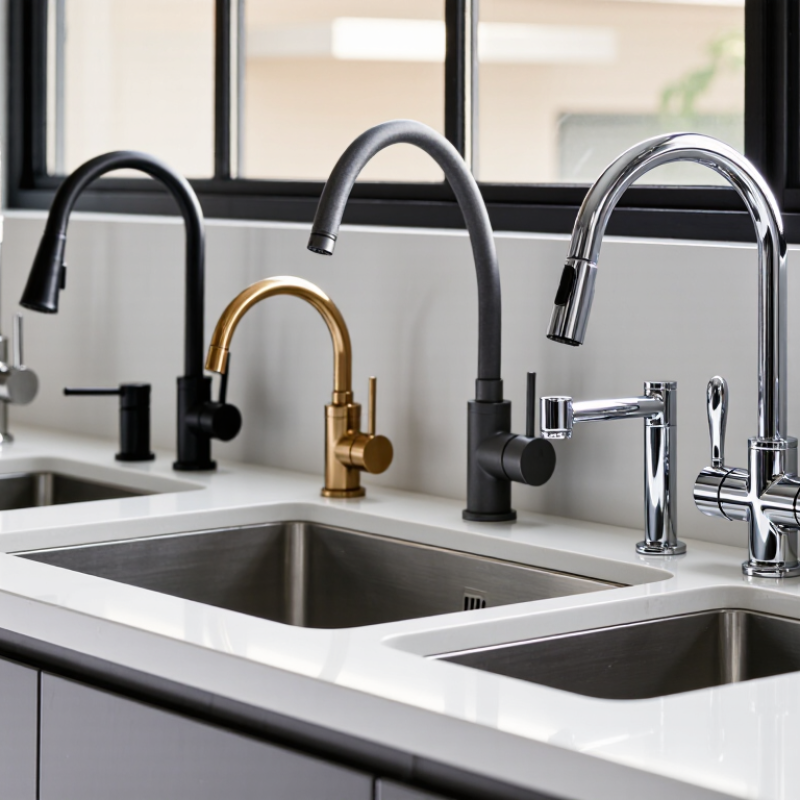
Choosing the right Kitchen Sink Tap can shape daily comfort, water control, and long-term kitchen maintenance. For global buyers, the decision involves more than appearance. Water pressure, installation standards, sink depth, counter thickness, and local plumbing connections all matter. A tall pull-out model may suit a deep workstation sink, while a compact mixer can work better beneath low cabinets. Finishes also behave differently. Brushed stainless steel often hides fingerprints, but hard-water deposits may still appear around the aerator.

This guide examines ten Kitchen Sink Tap options for different homes, budgets, and regional requirements. Each option is considered through practical features, material quality, usability, cleaning needs, and installation flexibility. We also look at ceramic cartridges, swivel range, spray functions, replacement parts, and manufacturer support. Small details matter. A stiff lever becomes frustrating quickly. A short hose limits cleaning access. Some attractive taps may not fit standard fittings in every country, so buyers should confirm measurements before ordering. That step is easy to overlook.

The recommendations are informed by product specifications, user-focused evaluation, and common installation experience. Still, no tap is perfect for every kitchen. Water conditions differ. Expectations differ too. A premium finish can scratch, and budget models may perform surprisingly well. Readers should treat this list as a practical starting point, then verify local compatibility, warranty terms, and professional installation advice. Good choices are not always the most expensive ones. They are the ones that remain reliable beside the sink, day after day.
10 Best Kitchen Sink Tap Options for Global Buyers

Global Kitchen Tap Market: Standards, Formats, and Buyer Priorities

10 Best Kitchen Sink Tap Options for Global Buyers

The global kitchen tap market is shaped by water safety, installation standards, and changing household habits. Fortune Business Insights valued the global faucets market at about USD 9.97 billion in 2023 and forecasts continued growth through 2032. However, market size does not guarantee equal product quality. Buyers should check certification, testing scope, and local service access.

Formats vary by region. Pull-out and pull-down taps suit deep sinks and frequent rinsing. Wall-mounted models can save counter space, but they require accurate pipe positioning. Single-lever controls are practical for busy kitchens. Touchless versions reduce handle contact, yet sensors need reliable power and cleaning. Standards matter more than appearance. ASME A112.18.1/CSA B125.1 is widely used in North America, while EN 817 applies to many European mechanical mixers. Materials contacting drinking water may also require NSF/ANSI 61 or equivalent approval.

Water efficiency deserves closer attention. The U.S. Environmental Protection Agency limits standard kitchen faucets to 2.2 gallons per minute, while WaterSense specifications commonly target 1.5 gallons per minute for eligible faucet categories. WHO and UNICEF reported that 2.2 billion people lacked safely managed drinking water in 2022, making dependable performance especially important. A lower flow rate can feel weak if the aerator is poorly designed. That is easy to overlook. Buyers should compare measured flow, spare parts, hose length, warranty terms, and regional compatibility. A polished finish is helpful, but it cannot repair an unsuitable thread or unavailable cartridge.

Water Efficiency Benchmark: WaterSense’s 1.5 gpm (5.7 L/min) Rating

10 Best Kitchen Sink Tap Options for Global Buyers

A useful benchmark for kitchen sink taps is WaterSense’s 1.5 gpm rating, equal to about 5.7 L/min. This figure measures flow efficiency, not overall performance. A well-designed aerator can maintain a strong, steady stream while using less water. However, real results depend on household pressure, pipe size, and installation quality. A tap rated at 1.5 gpm may feel slow in a low-pressure apartment. That is an important limitation.

When comparing the ten best options, check the flow rate at the stated pressure. Read the technical sheet carefully. Look for ceramic cartridges, corrosion-resistant materials, and replaceable aerators. Pull-out or flexible spray heads can improve rinsing control, but poorly fitted hoses may leak over time.

Global buyers should also confirm connection sizes and local water regulations. Certification marks are helpful, yet they do not replace independent inspection. A reputable plumber can test pressure and check for hidden leaks after installation.

Tips: Place a measuring jug beneath the tap for ten seconds. Multiply the collected litres by six to estimate litres per minute. Repeat the test with the spray function. Clean the aerator every few months, especially in hard-water regions. Efficiency is not always convenient. Some users may need a slightly stronger stream for large cookware, and choosing the lowest rating without testing can create frustration.

Ten Tap Types Compared: Pull-Down, Pull-Out, Bridge, Filtered, and Sensor

10 Best Kitchen Sink Tap Options for Global Buyers

Choosing a kitchen tap depends on sink depth, water pressure, cleaning habits, and local fitting standards. After comparing common installations, I find pull-down taps most practical for deep sinks. Their flexible hose reaches corners and helps rinse large pans. However, the spray head can feel heavy after repeated use.

Pull-out and Bridge Taps Pull-out taps suit compact kitchens because the shorter head reduces overhead movement. They are comfortable for filling pots beside the sink. Bridge taps add a traditional, sturdy appearance, but they need two mounting holes and more counter space.

Filtered Taps Filtered taps provide drinking water through a separate channel, reducing countertop clutter. Buyers should check filter replacement costs and filtration performance, not just appearance. Results vary with source-water quality.

Sensor Taps Sensor taps improve hygiene when hands are covered with dough or raw food residue. They require batteries or a reliable power connection, and some sensors react slowly under strong sunlight.

A basic single-lever tap remains easier to repair in many regions. That matters when replacement parts are difficult to find. My preference is not universal. A pull-down model works well in my deep sink, yet a pull-out design may feel better in a narrow apartment kitchen. Measure the hole diameter, spout reach, and clearance before ordering. Small errors become expensive. Local plumbers can also confirm thread sizes, pressure requirements, and compatible shut-off connections.

Safety and Materials: NSF/ANSI 61, WRAS Approval, and 304 Stainless Steel

For global buyers, a kitchen sink tap must protect water quality as well as provide smooth control. NSF/ANSI 61 certification indicates that wetted components have been evaluated for drinking-water contact. Check the exact model, not only the supplier’s general certificate. Small internal parts matter.

WRAS approval is especially relevant for projects connected to UK water systems. It confirms that the tap meets recognized requirements for water fittings and backflow protection. Requirements can differ by country, building type, and installation method. Ask for current approval documents and verify the listed product number.

304 stainless steel offers useful resistance to rust, stains, and daily kitchen moisture. Its brushed surface can hide fingerprints, while a polished finish shows scratches more easily. However, 304 stainless steel is not completely corrosion-proof. Salt residue, harsh cleaners, and poor welding can still damage the surface.

Inspect the cartridge, seals, aerator, and flexible hoses because they may use different materials. A tap may look solid outside but feel less convincing during installation. Check wall thickness, thread quality, and movement of the handle. Certifications improve confidence, but they do not replace practical inspection. This is where buyers sometimes overlook details. A reliable specification should state material grades, test scope, approval status, and maintenance guidance in clear language.

Selection Framework: Spout Reach, Mounting, Pressure, Warranty, and Local Codes

10 Best Kitchen Sink Tap Options for Global Buyers

Choosing among the 10 best kitchen sink tap options starts with the sink itself. Measure from the mounting hole to the basin center. A spout reach of 200–250 mm often suits standard single-bowl sinks, but deep basins need more coverage. Check the swivel range too. A beautiful tap can still splash badly.

Mounting compatibility matters. Single-hole, three-hole, wall-mounted, and deck-mounted models are not interchangeable. Pressure is equally important. Many household systems operate near 2–3 bar, while gravity-fed homes may deliver less. Test the tap’s minimum pressure rating before ordering. Flow rate deserves attention. The European Commission’s Ecodesign framework encourages efficient water use, while local plumbing rules may limit maximum flow. Do not rely on photographs.

Warranty terms reveal practical confidence, but they need careful reading. Confirm coverage for cartridges, seals, finish, and labor. Keep installation records and water-quality notes. The 2023 WHO/UNICEF Joint Monitoring Programme reported that 2.2 billion people lacked safely managed drinking water in 2022, making material safety and maintenance more than cosmetic concerns. For potable use, check recognized standards such as NSF/ANSI/CAN 61, EN 817, or applicable national equivalents. Local codes may also require backflow protection, certified connectors, or specific thread sizes. I would inspect these details twice. Online specifications are sometimes incomplete, and that remains an uncomfortable weakness in global buying.

10 Best Kitchen Sink Tap Options for Global Buyers

Selection Framework: Spout Reach, Mounting, Pressure, Warranty, and Local Codes

Flow-rate compliance is one of the most practical screening criteria when comparing kitchen sink taps across markets. The chart shows maximum kitchen faucet flow rates measured at 60 psi for two United States regulatory benchmarks. Buyers should also confirm spout reach, mounting-hole compatibility, available water pressure, warranty coverage, and local plumbing requirements before purchase.

Reference values: United States federal maximum kitchen faucet flow rate: 2.2 gallons per minute (8.3 L/min); California maximum kitchen faucet flow rate: 1.8 gallons per minute (6.8 L/min). The European Union does not apply one single EU-wide maximum flow limit for all kitchen taps, so national requirements should be checked separately.

FAQS

How should buyers choose a kitchen tap format?

Match the tap to sink depth, water pressure, and daily cleaning habits. Pull-down models suit deep sinks and large pans. Pull-out models fit compact kitchens better. Measure twice. Small errors can become expensive.

What should buyers check before ordering a kitchen tap?

Measure the mounting-hole diameter, spout reach, and available clearance. Confirm thread sizes and shut-off connections locally. A polished finish cannot fix an unsuitable fitting.

Are pull-down taps suitable for every kitchen?

No. Pull-down taps reach deep corners and rinse large cookware effectively. However, their spray heads may feel heavy after repeated use. This detail is easy to miss.

When is a pull-out tap a better choice?

Pull-out taps work well in narrow kitchens and smaller sinks. Their shorter head reduces overhead movement. They also help fill pots beside the sink. Comfort varies by user.

What are the limitations of wall-mounted and bridge taps?

Wall-mounted taps save counter space but need accurate pipe positioning. Bridge taps create a sturdy, traditional appearance. They require two mounting holes and additional counter space.

Are sensor kitchen taps worth considering?

Sensor taps reduce handle contact when hands contain dough or food residue. They need batteries or dependable power. Strong sunlight may affect sensor response. Basic controls remain easier to repair.

What water-efficiency details matter most?

Compare measured flow rates rather than relying on appearance. Standard kitchen taps may allow higher flow, while efficient models use less water. A low flow can feel weak with a poor aerator.

What certification and material checks are important?

Check relevant regional installation standards and drinking-water material approvals. North American and European requirements may differ. Certification scope matters more than a decorative surface. Local compatibility still needs confirmation.

What should buyers know about filtered kitchen taps?

Filtered taps provide drinking water through a separate channel. Check replacement-filter costs and actual filtration performance. Results depend on source-water quality. The filter is not maintenance-free.

Conclusion

Choosing the right Kitchen Sink Tap requires more than comparing appearance and price. Global buyers should consider regional plumbing standards, water pressure, installation formats, and daily usage habits. Common options include pull-down, pull-out, bridge, filtered-water, and sensor-operated taps, each offering different benefits in convenience, reach, flexibility, and hygiene. A practical water-efficiency benchmark is 1.5 gallons per minute, or 5.7 liters per minute, which can help reduce water consumption without compromising normal kitchen tasks.

Safety and durability are equally important. Look for materials such as 304 stainless steel and products tested for contact with drinking water under recognized standards, including NSF/ANSI 61 or WRAS approval where applicable. Before purchasing, evaluate spout reach and height, mounting-hole compatibility, countertop thickness, household water pressure, cartridge quality, warranty coverage, and local installation codes. By balancing performance, compliance, maintenance needs, and long-term reliability, buyers can select a tap that suits both modern kitchens and regional requirements.


Mason

Mason

Mason is a seasoned marketing professional with a deep expertise in the company's offerings and a passion for driving brand awareness. With a strong background in digital marketing strategies, he has an innate ability to connect with diverse audiences and effectively communicate product benefits.......