Choosing the right kitchen sink in 2026 requires more than comparing shapes, colors, and online prices. Global buyers must consider installation methods, local water conditions, cabinet sizes, and long-term maintenance. This guide explores leading sink types, including stainless steel, granite composite, fireclay, ceramic, and workstation designs. It explains where each option performs well and where it may disappoint.
For Kitchen Sink purchasing decisions, practical experience remains valuable. A deep single bowl can hold large cookware, but it may splash in a shallow counter. A workstation sink can save preparation space, yet its accessories need careful cleaning. Stainless steel usually offers strong durability and easier transport. Composite sinks provide a quieter surface, although darker finishes may show mineral marks. These details matter.
Reliable selection should begin with manufacturer specifications, installation instructions, warranty terms, and independent product testing. Buyers should verify bowl dimensions, drain compatibility, mounting requirements, and available replacement parts before ordering. Regional standards and professional plumbing advice also deserve attention. A beautiful sink is not automatically a suitable sink. Space matters.
Some recommendations in this market remain imperfect. Product quality can vary between factories, even when descriptions look identical. Shipping damage is another practical concern, especially for fragile fireclay models. Therefore, this overview compares design, function, material behavior, and sourcing risks rather than declaring one universal winner. The best choice depends on the kitchen’s workload, budget, climate, and installer’s skill. That conclusion may sound less exciting, but it is more dependable for real-world buyers.
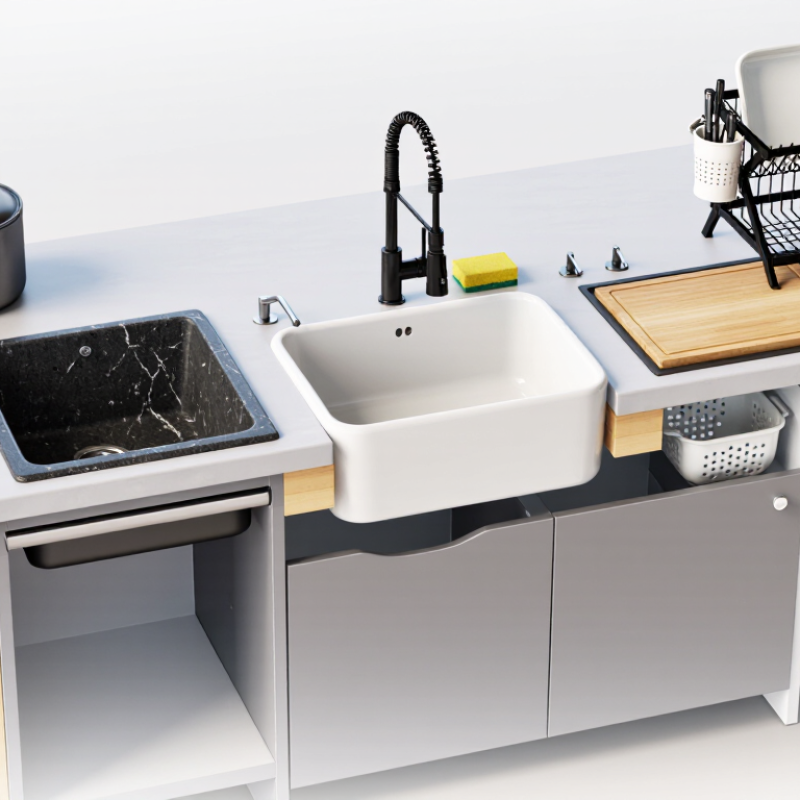
Kitchen sink types now serve different daily tasks, not just different visual styles. Undermount sinks create a smooth counter edge and simplify crumb removal. Top-mount models usually offer easier installation and practical replacement. Farmhouse sinks provide a forward-facing basin with strong capacity, but their exposed fronts need careful protection. Workstation sinks add ledges for colanders, drying racks, and cutting boards. Their core function is workflow control.
Houzz’s 2024 U.S. Kitchen Trends Study reported that undermount sinks remained the leading choice among renovating homeowners, at about 63%. The study also showed strong demand for larger single-bowl configurations. This reflects real use: roasting pans, stockpots, and baking trays need uninterrupted space. The NKBA 2024 Kitchen Trends Report also highlights multifunctional kitchen features and efficient preparation zones. Still, bigger is not always better. A deep basin can strain shorter users and increase water use during rinsing. I would not specify one type without checking cabinet width, plumbing position, and user height.
Tips: Match sink depth to the main cookware. Choose stainless steel for impact resistance and easy maintenance. Select composite surfaces when quieter operation matters. Confirm the drain location before ordering. Small errors become expensive.
For global buyers, regional habits deserve attention. Two-bowl sinks support parallel washing and rinsing, while single-bowl sinks suit large cookware. Sink accessories should be removable and replaceable. Reports provide useful direction, but household behavior remains the final test. Data can guide a decision. It cannot wash the dishes.
In 2026, global kitchen buyers are paying closer attention to sink layout, not just surface finish. The right bowl configuration changes washing speed, water use, and counter space. A single-bowl sink gives large cookware room, including wide roasting trays and stockpots. It suits compact kitchens and households that wash bulky items by hand. One open basin is easy to clean, although dirty dishes remain visible. That detail matters in open-plan homes.
A double-bowl sink separates tasks without requiring extra counter space. One bowl can hold soapy water, while the other handles rinsing or food preparation. Equal bowls support balanced routines; unequal bowls leave space for baking sheets. Buyers should check bowl depth, drain position, and cabinet clearance before ordering. A deep basin may reduce splashing, but it can strain shorter users. Small ergonomic mistakes become daily annoyances.
Multi-bowl designs serve busy kitchens with several simultaneous tasks. Three sections can separate washing, rinsing, and produce preparation, especially in larger family homes or shared cooking spaces. However, more dividers mean less room for oversized cookware. Installation also demands accurate measurements, sturdy support, and suitable plumbing connections. From project reviews, I have found that users often overestimate the value of extra bowls. More capacity sounds better. Not always better. Regional cooking habits, water pressure, cleaning routines, and cabinet space should guide the decision.
Single-bowl, double-bowl, and multi-bowl sink designs compared by typical bowl count and planning width.
Single-bowl sinks are commonly planned for approximately 600 mm cabinet modules, double-bowl sinks for around 800 mm, and multi-bowl sinks for around 1,000 mm or more. Actual dimensions vary by bowl geometry, drainage area, installation method, and local kitchen standards.
Stainless steel remains a practical choice for global kitchens because it handles heat, impact, and daily cleaning well. A thicker sheet usually reduces vibration and feels more stable during installation. Brushed surfaces hide fine scratches better than mirror finishes. However, low-quality steel can show water spots, dents, or rust near damaged edges. It is not maintenance-free.
Granite composite sinks offer a heavier, quieter feel and resist many stains from coffee, wine, and cooking oils. Their textured surface can hide minor marks, but pale colors may reveal hard-water residue. Sudden temperature changes may also create stress, especially after years of use. Proper cabinet support matters because these sinks are considerably heavier. Installers should check the material specification, not rely only on appearance.
Fireclay and ceramic sinks provide a smooth, bright surface that suits traditional and modern kitchens. They resist heat and common household stains, although dropped cookware can chip the glaze. Copper gives a warm, changing finish, but its appearance depends on cleaning habits and humidity. Some users enjoy the natural patina; others find it difficult to control. In coastal or high-humidity regions, ventilation and careful drying deserve more attention. My own preference changes with the project: stainless steel is easier for busy rental kitchens, while composite materials feel quieter in family homes. Performance still depends on thickness, mounting quality, water conditions, and everyday care.
Undermount sinks remain popular for modern kitchens because crumbs wipe directly into the basin. They need a strong countertop edge and accurate cabinet support. Topmount sinks are easier to install and replace, making them practical for rental properties and renovation projects. However, their visible rim can collect water and dust. Houzz’s 2024 U.S. Kitchen Trends Study found that roughly three-quarters of renovating homeowners replaced their sinks, showing how strongly this fixture affects kitchen upgrades.
Farmhouse sinks create a deeper, more visible focal point. Their front apron needs careful cabinet preparation and reinforced support. This style suits large cookware, but it may reduce storage space beneath the bowl. Integrated sinks use matching countertop material, such as engineered stone or solid surface. They offer clean lines and fewer visible joints. Yet, repairs can be expensive if the basin or countertop is damaged. The NKBA 2024 Design Trends Report continues to identify easier cleaning and streamlined surfaces as important kitchen priorities.
Tips: Confirm cabinet dimensions, drain location, overflow design, and local plumbing requirements before ordering. Ask for a technical drawing. Small measurement errors become costly. For global projects, check water hardness and available service skills. Stainless steel often handles busy kitchens well, while composite materials can hide light scratches. Still, no sink is maintenance-free. The best selection balances installation skill, daily habits, replacement access, and long-term cost.
Global buyers should compare sink types by use, construction, and documented performance. The Fortune Business Insights market report valued the global kitchen sink market at about USD 3.1 billion in 2023. This growth reflects wider demand, but market size does not prove product quality. Stainless steel suits busy kitchens because it resists impact and tolerates hot cookware. Compare steel grade, sheet thickness, weld quality, and sound insulation. A thinner basin may look attractive online, yet feel noisy under a running tap.
Granite composite offers color stability and a solid, stone-like surface. Check resin consistency, thermal-shock testing, and resistance to staining. Ceramic or fireclay sinks provide a smooth finish, but their weight requires stronger cabinetry. Workstation sinks add ledges for boards and colanders. Measure accessory fit carefully. Small errors matter. A 10-millimeter mismatch can make daily cleaning frustrating. According to the 2024 Houzz U.S. Kitchen Trends Study, homeowners continue investing heavily in kitchen improvements, making long-term maintenance a practical buying concern.
Quality documents deserve close review. EN 13310 covers functional requirements and test methods for domestic sinks, including overflow and drainage performance. NSF/ANSI 51 addresses materials used in food equipment and their suitability for food contact areas. Ask suppliers for test reports, material declarations, dimensional drawings, and batch traceability. ISO 9001 certification can indicate controlled processes, but it does not certify every sink model. That distinction is easy to miss. I would also request corrosion, impact, and drainage results from an independent laboratory. Specifications can still be incomplete, so buyers should inspect samples rather than trust polished photographs.
Crumbs can be wiped directly into the basin. This creates a smooth, easy-clean countertop. A strong counter edge and accurate cabinet support are essential.
Topmount sinks are easier to install, remove, and replace. They suit rental homes and renovation projects. Their visible rim may collect water and dust.
Farmhouse sinks create a deep, visible focal point. They handle large pots and cookware well. Their front apron needs careful cabinet preparation. Under-sink storage may become smaller.
Integrated sinks provide clean lines and fewer visible joints. They use matching countertop materials. Damage can make repairs expensive. I might value appearance too much here.
Stainless steel usually handles impacts and hot cookware well. Compare thickness, weld quality, and sound insulation. Thin basins can sound loud under running water. Measure twice.
Composite surfaces can hide light scratches and offer stable colors. Check staining and thermal-shock resistance. Ceramic and fireclay sinks are smooth but heavy. Strong cabinetry is necessary.
Request test reports, material declarations, dimensional drawings, and batch traceability. Inspect physical samples whenever possible. Photographs can hide weak welds or uneven surfaces. Not always obvious.
Confirm cabinet dimensions, drain position, overflow design, and accessory compatibility. Check local plumbing requirements too. A ten-millimeter mismatch can disrupt daily cleaning. Small errors matter.
No. Testing standards can cover drainage, overflow, materials, or manufacturing processes. A process certificate does not approve every model. Independent corrosion and impact results are useful.
Check local water hardness, replacement access, and available service skills. Compare installation difficulty with future repair costs. No sink is maintenance-free. I would leave more room for uncertainty.
In 2026, kitchen sinks are designed to support efficient food preparation, cleaning, and modern kitchen organization. Single-bowl sinks provide generous space for large cookware, while double-bowl models separate washing and rinsing tasks. Multi-bowl designs offer greater flexibility for busy households and professional-style kitchens. Material selection also affects performance: stainless steel is valued for durability and easy maintenance, composite materials provide strength and color variety, and ceramic or solid-surface options offer distinctive visual appeal with suitable care.
For Kitchen Sink buyers, installation style is another important consideration. Undermount sinks create a seamless countertop transition, topmount models are practical and easy to install, farmhouse sinks add a deep front-facing basin, and integrated sinks deliver a coordinated, streamlined appearance. Global buyers should compare bowl size, drainage design, material thickness, surface resistance, installation requirements, and applicable quality standards. Evaluating these factors together helps buyers choose a sink that balances function, durability, hygiene, maintenance, and long-term value for different residential and commercial applications.

YiGeng