Choosing among the 2026 Top Types of Kitchen Sink Faucets for Buyers requires more than comparing finishes. A faucet shapes daily routines, from rinsing leafy vegetables to filling a tall stockpot. It also affects water use, cleaning effort, counter space, and long-term repair costs. Small details matter.
Richard Trethewey, a respected plumbing expert from This Old House, has said, “The faucet is the most used fixture in your kitchen.” That observation remains practical for modern buyers. Pull-down, pull-out, single-handle, bridge, touchless, and pot-filler models each solve different problems. A pull-down sprayer may suit a deep farmhouse sink. A compact pull-out design may work better beside a narrow backsplash. Touchless controls can reduce contact after handling raw food, but sensors may need careful positioning.
This guide examines the leading Kitchen Sink Faucets categories expected to attract buyers in 2026. It considers reach, spray performance, installation requirements, finish durability, cartridge quality, and warranty support. Certifications also deserve attention, especially for drinking-water safety and efficient flow rates. A beautiful faucet can still disappoint if its hose retracts poorly or its handle feels loose.
There is no perfect choice.
Even experienced homeowners can overlook cabinet clearance or sink thickness. I have found that installation conditions often matter more than showroom appearance. Buyers should measure twice, check replacement parts, and question exaggerated marketing claims. The right faucet should feel natural every morning, not merely impressive on purchase day.
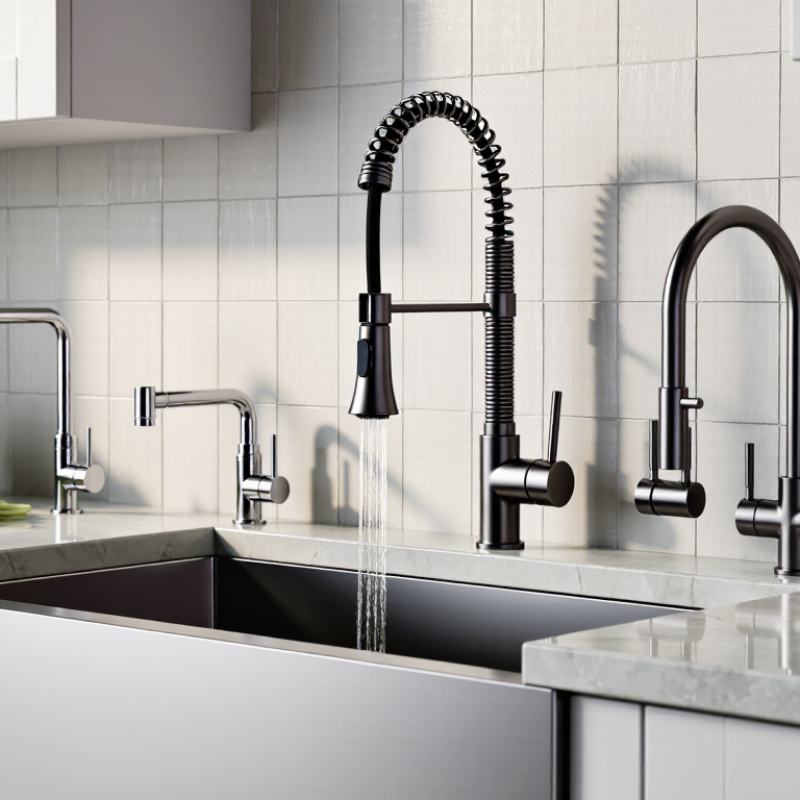
2026 Top Types of Kitchen Sink Faucets for Buyers?
A kitchen sink faucet type is defined by more than its finish or silhouette. It describes how the faucet mounts, controls water, moves its spout, and delivers flow. A deck-mounted faucet fits the sink or countertop, while a wall-mounted model requires plumbing inside the wall. Hole spacing matters. A faucet may look suitable but fail to cover the existing openings.
Pull-down and pull-out faucets use flexible hoses for rinsing dishes, vegetables, and deep cookware. Pull-down models usually pair with taller spouts, while pull-out designs need less overhead clearance.
Single-handle faucets offer quick temperature adjustment with one hand. Two-handle models provide separate hot and cold control, which some users prefer for precise mixing.
Touchless faucets add sensors, but batteries, power connections, and sensor placement deserve careful inspection.
Other types include bridge faucets, filtered-water faucets, and compact bar-sink models. Bridge designs can suit traditional kitchens, yet their wider bodies may crowd a narrow sink. Filtered-water models need compatible cartridges and replacement access.
A reliable buying check should include sink-hole count, countertop thickness, spout reach, cabinet clearance, connection size, and water-pressure requirements. Certified materials and tested flow performance also matter.
The labels can overlap. That is the confusing part. A faucet may be pull-down, touchless, and filtered at the same time, so buyers should compare functions rather than rely on one category.
2026 Top Types of Kitchen Sink Faucets for Buyers?
Pull-down, pull-out, and high-arc faucets solve different kitchen problems. A pull-down model has a tall spout and a spray head that moves directly into the basin. It suits deep sinks and large pots. The vertical hose feels stable during daily rinsing. However, very tall designs may splash in shallow basins.
A pull-out faucet uses a shorter spout with a head that extends toward you. It offers better control when filling a countertop container or washing vegetables nearby. This design can feel less imposing in compact kitchens. A high-arc faucet creates more clearance beneath the spout. That space helps when stacking cookware, but the extra height is not always practical. Measure the distance from the sink to nearby cabinets before choosing. I once underestimated this measurement, and the handle felt awkward against the cabinet door.
Tips: Check hose reach, spray-button comfort, and counter thickness. Pull the head several times before buying, if possible. The return movement should feel smooth, not forced. Also inspect the mounting area beneath the sink. Tight spaces can make installation unnecessarily difficult. Choose a ceramic cartridge and corrosion-resistant fittings for dependable use. Water pressure matters too. A powerful spray head may disappoint in a low-pressure home. There is no perfect style. Your sink depth, cabinet clearance, and cleaning habits should decide.
Touchless, Touch-Activated, and Smart Kitchen Faucets
Touchless faucets use infrared sensors to start water without touching the handle. This helps when your hands hold raw vegetables, dough, or a greasy pan. However, sensor range matters. A weak or overly sensitive sensor can interrupt washing when a hand moves nearby. Check battery access, response speed, and manual override options before buying.
Touch-activated faucets respond when you touch the spout or handle with your wrist. They usually feel more predictable than touchless models, especially under bright kitchen lighting. Smart faucets add voice control, water measurement, or personalized temperature settings. These features can improve convenience, but they also add software and connection points. More technology is not automatically better. A simple control may remain useful during a network failure.
Tips: Test the faucet with wet hands before installation. Choose a finish that shows fewer water spots, and confirm the spout reaches the center of your sink. Look for clear installation instructions, replaceable aerators, reliable temperature control, and compliance with local plumbing standards. Remember that batteries can die at inconvenient times. Keep replacements nearby. My own buying preference would depend on daily habits, not novelty; a busy cook may value touchless control, while another user may prefer the direct feel of a touch-activated handle.
| Faucet Type | How It Works | Typical Power Source | Best Use Case | Main Advantages | Potential Limitations | Installation Considerations | Maintenance Needs | Relative Cost | Buyer Suitability |
|---|---|---|---|---|---|---|---|---|---|
| Touchless Kitchen Faucet | A motion sensor detects a hand or object near the sensing zone and starts or stops the water flow without physical contact. | Battery-powered or household electrical power; battery operation is common for easier installation. | Busy kitchens, food preparation, and households that want to reduce contact with the faucet handle. | Hands-free operation Less surface contact Helpful during food preparation | Sensor activation can be affected by placement, reflections, strong sunlight, or objects left near the detection area. | Requires suitable clearance for the sensor and access to the control box or battery compartment below the sink. | Clean the sensor window and aerator regularly; replace batteries when required if the model is battery-powered. | Medium to high | ★★★★☆ |
| Touch-Activated Kitchen Faucet | A light touch on a conductive part of the faucet body turns the water on or off. The handle normally controls temperature and flow. | Usually battery-powered or connected to a low-voltage power module. | Users who want quick activation but prefer a physical touch over motion sensing. | Simple operation Fewer accidental activations Easy temperature control | Touch activation may not work reliably with insulated gloves or when the faucet surface is heavily coated with dirt or mineral deposits. | Correct grounding and installation of the power module are important for reliable touch detection. | Keep the touch-sensitive surface clean and inspect battery contacts or wiring periodically. | Medium to high | ★★★★☆ |
| Smart Kitchen Faucet | Uses electronic controls and may combine touchless or touch activation with voice commands, preset dispensing, app functions, or usage monitoring. | Battery-powered, plug-in low-voltage adapter, or a combination of both depending on the functions provided. | Connected homes, measured water dispensing, and users who value automation and programmable features. | Advanced automation Preset dispensing Optional voice control | Higher purchase cost, greater electronic complexity, possible app or network dependence, and potential privacy considerations for connected features. | Check cabinet space, electrical access, wireless requirements, and compatibility with the home network or voice assistant before buying. | Maintain the sensor and aerator, replace batteries if applicable, and keep firmware or connected applications updated. | High | ★★★☆☆ |
| Pull-Down Kitchen Faucet | A detachable spray head pulls downward from the faucet neck and usually switches between stream and spray modes. | Mechanical operation; no power required unless combined with electronic controls. | Deep sinks, rinsing cookware, washing vegetables, and general-purpose kitchen use. | Good reach Convenient rinsing No electronics required | The hose and spray head can wear over time, and the tall profile may be unsuitable beneath low cabinets. | Confirm the number of sink or countertop holes and available vertical clearance before installation. | Clean the spray-face nozzles and check the hose, weight, and connection points for leaks. | Low to medium | ★★★★★ |
| Pull-Out Kitchen Faucet | The spray head extends forward from the faucet body, providing a flexible hose for rinsing and filling containers. | Mechanical operation; no power required unless paired with electronic features. | Small kitchens, shallow sinks, and areas with limited overhead clearance. | Compact design Flexible reach Suitable for low cabinets | Generally provides less vertical clearance than a pull-down design, which may be less convenient for tall pots. | Measure cabinet clearance and ensure the hose can extend without obstruction below the sink. | Clean the spray head and inspect the hose for kinks, abrasion, or mineral buildup. | Low to medium | ★★★★☆ |
| Single-Handle Kitchen Faucet | One lever controls both water temperature and flow, allowing operation with one hand. | Mechanical operation; no power required unless combined with touch or sensor controls. | Budget-conscious buyers, straightforward renovations, and kitchens needing simple temperature adjustment. | Easy to operate Simple installation Broad compatibility | Physical contact is required, and a worn cartridge can cause dripping or difficulty adjusting temperature. | Verify sink-hole configuration and the clearance needed to move the handle through its full range. | Clean the aerator and replace the cartridge or seals if leakage develops. | Low to medium | ★★★★★ |
Buyer note: Actual features, power requirements, water-flow limits, installation methods, and prices vary by model. Always check the product specifications and local plumbing requirements before purchase.
2026 Top Types of Kitchen Sink Faucets for Buyers?
Wall-mount faucets create a clean, open look above the sink. They work well with deep basins and narrow countertops. Their water lines hide inside the wall, so installation requires accurate pipe placement. A small measuring error can become expensive later. Bridge faucets connect hot and cold water through a visible horizontal bar. They suit traditional kitchens and offer strong visual character. However, their exposed structure needs regular wiping around the joints.
Pot-filler faucets are useful beside a cooking surface. They let you fill heavy pots without carrying them from the sink. Choose a model with solid swing movement and secure wall support. A pot filler does not replace a main sink faucet. It also adds another connection that should be checked for leaks. Bar faucets are smaller and practical for islands, beverage stations, or secondary sinks. Their compact spouts fit limited spaces, but they may feel weak for washing large cookware.
Tips: Measure the sink, backsplash, and cabinet clearance before choosing. Check the faucet’s reach, mounting height, and handle movement. For wall-mount and pot-filler types, confirm plumbing locations with a qualified installer. I once underestimated backsplash thickness, and the handle became awkward to use. That mistake was avoidable. Style matters, but daily movement matters more. Test the reach on paper first.
Choosing the right kitchen sink faucet starts with your sink, not a product photograph. Measure the basin depth, mounting holes, backsplash clearance, and distance to nearby windows. A tall pull-down faucet suits deep basins, but it may splash in a shallow sink. Pull-out models work better beneath low cabinets. They provide a shorter arc and comfortable reach.
Check your daily habits before choosing extra features. If you wash large pans, select a spout that reaches most of the basin. A strong spray mode removes rice and grease, while a gentle stream protects vegetables. Touchless operation can reduce messy handles, yet its sensor needs batteries or reliable power.
Test the handle with a wet hand. It should move smoothly without forcing your wrist. Small details matter.
Material and installation deserve equal attention. Solid metal construction usually feels steadier than thin, lightweight fittings. Confirm the waterway material, replacement-part availability, and independent safety testing. Match the faucet to your water pressure and mounting setup. An adapter may solve a mismatch, but it can add another leak point.
I once chose a beautiful high-arc model without checking cabinet clearance. It fit, technically, but cleaning around it was awkward. A practical choice is not always the most attractive one.
An infrared sensor starts water when your hand enters its range. It helps while handling dough, raw vegetables, or greasy pans. Sensor behavior can be imperfect.
They respond when your wrist touches the spout or handle. Their response often feels predictable under bright kitchen lighting. Wet hands still deserve a test.
Some offer voice control, measured water delivery, or saved temperature settings. These features add convenience and more connection points. Simple controls may work better during network problems.
Measure basin depth, mounting holes, backsplash clearance, and nearby window space. A tall spout suits deep sinks but may splash in shallow basins. Measure twice.
Pull-down models suit deep basins and large pans. Pull-out models fit low cabinets and provide a shorter reach. Cabinet clearance can still be awkward.
A strong spray can remove rice and grease from pans. A gentle stream protects vegetables and reduces splashing. Water pressure affects both settings.
Solid metal usually feels steadier than thin, lightweight fittings. Check waterway materials, replacement parts, and independent safety testing. An adapter may create another leak point.
Test the handle with wet hands before installation. Confirm smooth movement, reliable temperature control, and clear instructions. Keep spare batteries nearby. They fail at bad times.
Not necessarily. A beautiful high-arc faucet may block cabinets or complicate cleaning. Daily habits should guide the decision, though preferences can change.
In 2026, Kitchen Sink Faucets are defined by more than appearance. Their type reflects installation method, spout design, control technology, height, reach, and the tasks they are built to support. Pull-down faucets offer a flexible spray head and tall arc for deep sinks, while pull-out models provide greater reach with less overhead clearance. High-arc designs improve workspace access, and touchless or touch-activated options add convenience and help reduce contact during food preparation. Smart features may include motion sensing, temperature control, water-use monitoring, and personalized settings.
Other useful types include wall-mount faucets for a clean, open countertop, bridge faucets for a traditional two-handle layout, pot fillers for convenient filling near the cooking area, and bar faucets suited to compact sinks or secondary preparation spaces. Choosing the right faucet depends on sink size, mounting holes, cabinet clearance, water pressure, preferred controls, cleaning habits, installation requirements, and budget. A well-matched faucet should combine practical performance, comfortable operation, durable construction, and a style that complements the kitchen.

YiGeng